


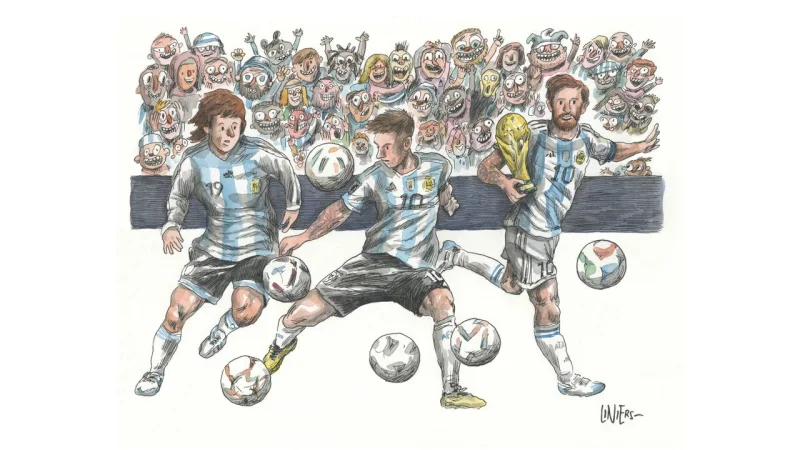
Lionel Messi was almost 19 when he made his World Cup debut on June 16, 2006, and he turned that first appearance into a goal ten minutes after coming off the bench. Argentina had sent him on in the 74th minute against Serbia and Montenegro, and by the end of the match he had already helped set up Carlos Tévez and then scored Argentina’s sixth goal himself.
That is why Messi age still matters in the World Cup story. He was not yet 19, but he was already being asked to carry moments that usually belong to veterans, and the match immediately showed why Argentina had been so eager to bring him into the tournament picture. In his next two World Cup games, he stayed on the field for Argentina, extending a debut that felt less like an introduction than an arrival.

The numbers behind that night are the reason it keeps coming back. Messi went on to play 26 World Cup games for Argentina from 2006 to 2022, a span that added up to more than 2,300 minutes. For a player who first appeared as a teenager, it became one of the longest and most sustained runs in the history of Argentina’s tournament life. By his second World Cup in 2010, the setting had changed to South Africa, but the expectations around him had already changed too.
There was, though, an early break in the smooth story. José Pékerman left Messi on the bench in Argentina’s quarterfinal loss to Germany, even after the teenager had scored in his first World Cup match. It was a reminder that a breakthrough does not always arrive with control over what follows, and that Argentina’s attachment to Messi was built as much on what was withheld as on what he produced.
Messi later played every minute of every Argentina World Cup game for the next twenty years until this summer, which makes that first burst against Serbia and Montenegro look even more decisive. The debate now is not whether he belonged on the biggest stage, but how quickly one debut at almost 19 became the start of a World Cup record that shaped two decades of Argentina’s expectations.
