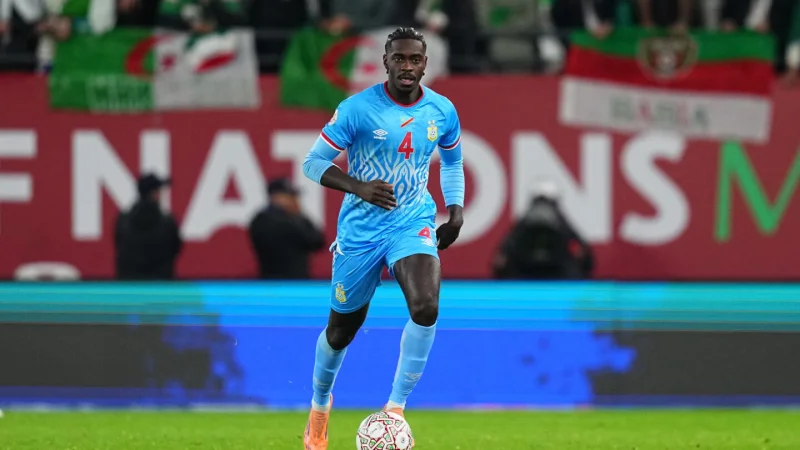
Axel Tuanzebe said African football has been disregarded for too long and argued that it is time to shine a light on it, a blunt public statement from a player whose own path runs from Bunia in the Democratic Republic of Congo to England and back to the country of his birth at senior level.
The comments matter now because Tuanzebe is no longer speaking only as a former England youth international. He played for England up to the U21 level before making his international debut for the Democratic Republic of Congo in 2024, and his view carries the weight of someone who has lived both sides of that divide.
Tuanzebe, who was born in Bunia and moved to England when he was four, rose through the Manchester United academy and went on to compete in the Premier League and UEFA Champions League for the club. He later helped Aston Villa earn promotion to the Premier League and did the same with Ipswich Town, before most recently featuring for Burnley this past season. That career path has left him well placed to talk about football structures that are seen and those that are not.
His remarks also touch a wider friction that follows many players with dual ties. Tuanzebe spent years in the England system before turning to the Democratic Republic of Congo, a choice that can be read as both personal and political: personal because it reaches back to where he was born, and political because it pushes attention toward African football at a moment when it is often discussed less than the game in Europe. The interview was conducted with Mary Omatiga in November 2025 and framed as part of NBC Sports’ By Way of Africa series.
The bigger point is that Tuanzebe is not asking for symbolic recognition alone. By putting his name to the argument, he is joining the conversation from inside it, as a player who has worn England’s colors at youth level and later committed to the Democratic Republic of Congo. With Les Léopards having reached their first World Cup knockout round and facing England, his comments land as both a statement of identity and a demand that African football be judged on its own terms.