


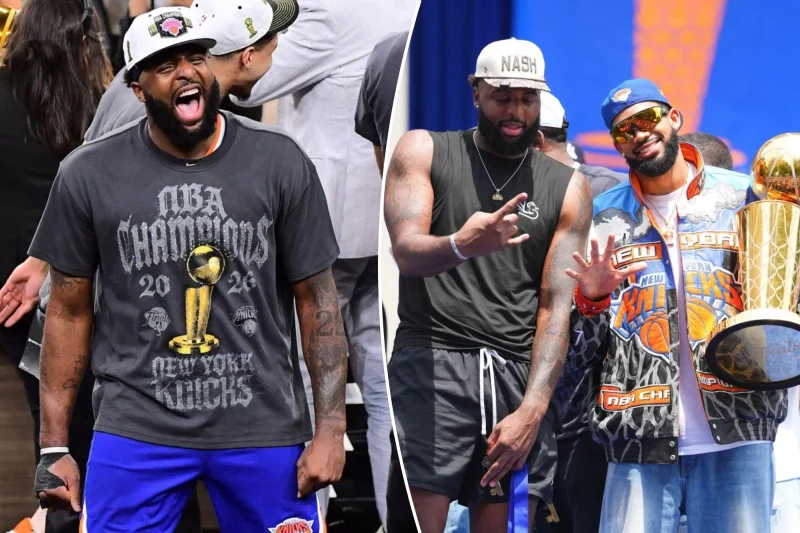
Mitchell Robinson is not coming back to the Knicks. The 28-year-old center intends to sign a three-year, $47.4 million contract with the Celtics in free agency, ending an eight-year run in New York that began with a second-round pick and finished with him as the club’s longest-tenured player.
The move surfaced on Tuesday, the first day teams were allowed to begin negotiating with all other free agents. The Post’s Stefan Bondy confirmed the reported agreement, and the timing matters because Robinson’s name has been tied to New York’s roster math for weeks. He developed from a raw shot-blocker into one of the NBA’s best rebounders and a key bench piece, which made him valuable enough that the Knicks would have liked to keep him if the numbers had worked.
They did not. The Knicks were already operating with a goal of staying under the second apron, and after agreeing to multiyear deals with Jose Alvarado and Landry Shamet and adding Mohamed Diawara, they were roughly $9 million below that line while still needing to sign three players. That left little room to make a respectable offer for Robinson, whose market value clearly ran far beyond a minimum deal. A minimum contract would have been only a small fraction of his reported $47.4 million price tag, and that gap is why the club’s front office had to choose between keeping him and preserving the payroll plan tied to owner James Dolan.
Robinson’s exit also leaves a practical hole on the floor. The Knicks now need a backup center behind Karl-Anthony Towns, and Ariel Hukporti is leaving for the 76ers in free agency, so the depth chart behind Towns is thinner than it was a week ago. Robinson had been part of the rotation in recent games, including a 13-minute stint in a Game 1 win, and he had also been listed questionable after returning to practice in another postseason moment, reminders of how often he mattered when New York needed size and rebounding.
No deal can be made official until July 6, but the direction is already set. The Knicks are moving on from their longest-tenured player, and the next task is not sentimental. It is structural: find another center, stay under the second apron, and do it with the market already moving around them.
