


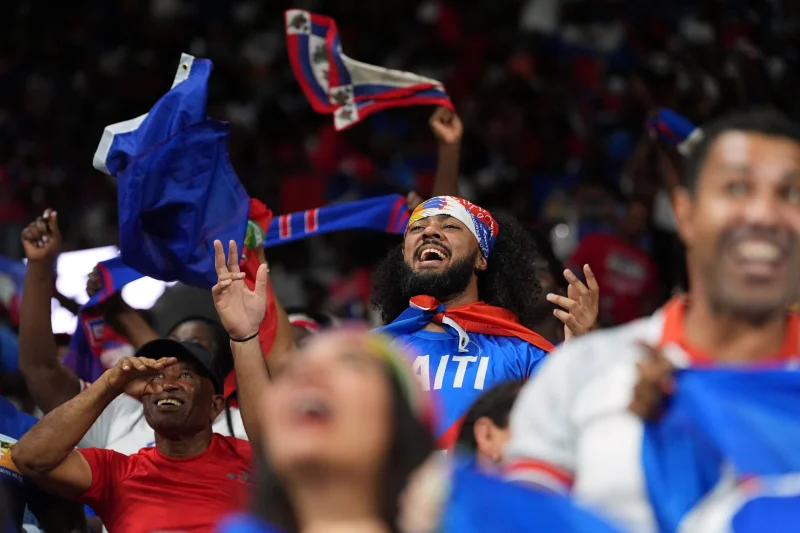
Haïti’s World Cup return ended in the first round, with the team finishing its 2026 campaign on 0 points, 8 goals conceded and 2 goals scored. The result closed the book on a rare appearance that came 52 years after its last place at the tournament.
For Wilson Isidor, the run will be remembered for one finish in particular. Against Maroc, he met a low pass from Jean-Kévin Duverne and turned it into what was described as a chef-d’œuvre, the kind of goal that lingered long after the standings were settled.
That is why Haïti’s exit landed with two meanings at once. On the field, the numbers were blunt: no points, too many goals allowed and a group-stage departure. But for supporters who had waited since 1974 to see the team back at the FIFA World Cup, the campaign still carried weight far beyond the table.
The contradiction showed up in the goals themselves. Haïti’s first score was listed in match statistics as a Yassine Bounou own goal, yet Haitian fans saw it differently because it came after Lenny Joseph’s backheel finish was deflected into the net. The second goal, the one Isidor finished against Maroc, gave the team another moment to claim as its own even in defeat.
That matters because Haïti did not ease into a forgiving group. It faced Brésil, Maroc and Écosse, with Maroc arriving as a semifinalist from the last World Cup and ranked 6th in the FIFA standings at the time. Écosse, meanwhile, reached the tournament by finishing first in its qualification group ahead of Danemark. Against that field, Haïti’s return was always going to be measured in more than points.
Justin Lhérisson’s words captured the mood better than any ledger could: “Pour le Pays, pour les Ancêtres, Marchons unis, Marchons unis !” That refrain fit a campaign that was, in competitive terms, a failure, but also a source of national pride and dignity for a team and a diaspora that had waited decades for the sight of Haïti back on the World Cup stage.
What comes next is not another match in this tournament. The open question is how Haïti carries the memory of this return after the final whistle: as a brief chapter with a hard ending, or as the start of something that finally makes 1974 feel less like a relic and more like a reference point.
