


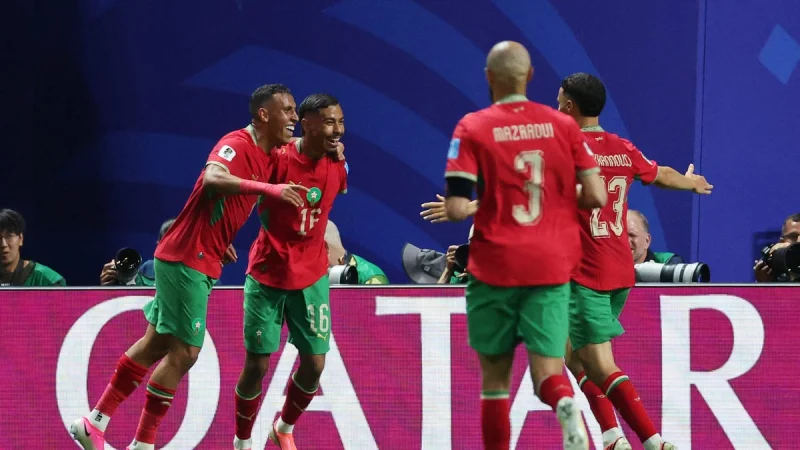
Morocco has turned the page on Walid Regragui and handed the team to Mohamed Ouahbi, a change that goes beyond a simple coaching switch. The new manager arrives with a more progressive label, but he also inherits a Morocco roster that looks very different from the one that shocked the World Cup in Qatar.
That is why the move matters now. Regragui once said he wanted to give children footballing DNA and, one day, a World Cup. Morocco is still trying to make that promise feel less like a slogan and more like a plan, with the 2030 tournament ahead and the country preparing as a co-host. For readers searching the Morocco roster, the question is no longer what happened in 2022. It is who is still there to carry it forward.
The benchmark remains clear. Morocco finished fourth at the 2022 World Cup after beating Belgium, Croatia, Spain and Portugal, a run that lifted it to sixth in the Fifa ranking, ahead of the Netherlands in seventh. It was the kind of breakthrough that can either become a foundation or a memory. Morocco wants the first version.
Ouahbi has already shown a glimpse of what that next phase might look like. Morocco went toe to toe with Brazil under him, a sign that the new setup can still compete with major opposition. But the team that made the last run so vivid has been stripped back. Hakim Ziyech and Sofiane Boufal had not played for Morocco since 2024. Romain Saiss retired from international football in February. Nayef Aguerd was injured. Youssef En-Nesyri was omitted from the squad.
Sofyan Amrabat was in the United States and was an unused substitute against Brazil and Scotland, which says as much about the transition as any team sheet could. Morocco’s World Cup story has always leaned on players from its diaspora, and it still does, but the current roster is being asked to do more than preserve old momentum. It has to build a new one without the same cast.
That is the tension inside Morocco’s project. Regragui’s side showed African teams could go toe to toe with anyone, but history also warns how hard it is to stay at that level. Senegal did not carry its 2002 surge into the next cycle, and Ghana fell back after 2010. Morocco is trying to avoid that pattern while moving toward 2030, and that makes Ouahbi’s job bigger than results alone. He has to keep the team competitive while remaking it at the same time.
The next test is not whether Morocco can recall the feeling of Qatar. It is whether this Morocco roster can produce it again without the same names, the same chemistry or the same certainty that the breakthrough is already behind them.
