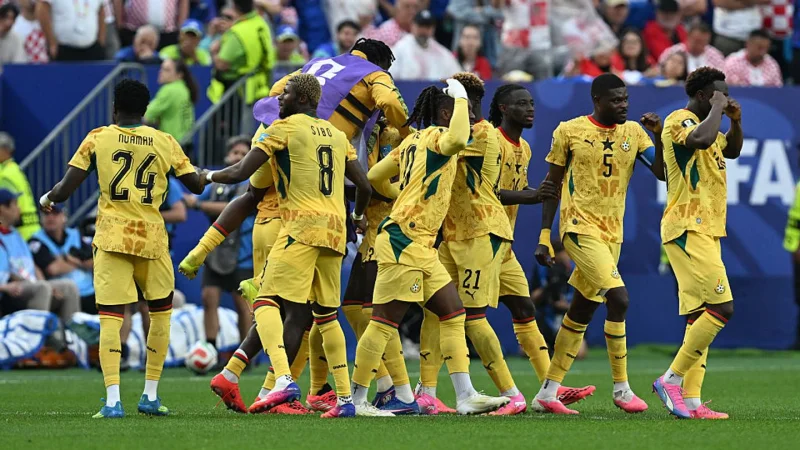
Carlos Queiroz took aim at FIFA’s expanded 48-team World Cup on the same day Ghana advanced to the round of 32, arguing that the tournament has lost the rarity that once gave it meaning. The coach said the competition had become “something vulgar and ordinary” after Ghana moved on from Group L despite finishing third behind England and Croatia.
His criticism lands now because the new format is not an abstract plan anymore. It is shaping the tournament in real time, deciding who stays alive and who goes home, while giving more teams a path out of the group stage. Ghana is one of the clearest examples: four years ago, third place in a group would have sent the Black Stars out, but under the current setup they are among the eight best third-place finishers and into the knockout rounds.
The math behind the change is simple. FIFA expanded the World Cup from 32 entrants to 48, added four automatic qualifying spots for Africa and a playoff place, and widened the road to the next round to 32 teams. That meant more qualifiers, more third-place teams advancing, and a different kind of pressure in the group phase. For Ghana, it was a lifeline. For Queiroz, it was proof that the tournament’s edge had been dulled.
He did not hide where he stood. Queiroz said value comes when things are rare, and that qualification should be serious, very tough and very competitive. He argued that when too many teams can make it, the significance begins to fade. He also pointed to South America, saying 70% of the confederation could have been at the World Cup, while South America still had six automatic qualifiers and Bolivia lost a playoff to Iraq.
The friction is impossible to miss: Ghana benefited from the expanded format, while Queiroz condemned the same system as a downgrade for the World Cup itself. Africa ended up with 10 qualifiers after DR Congo won the inter-confederation playoff, a sign of how much the balance has shifted under FIFA’s new rules. The next test is immediate for Ghana, which now turns to Colombia in the round of 32, carrying both the reward of the format and the debate it has reopened.