


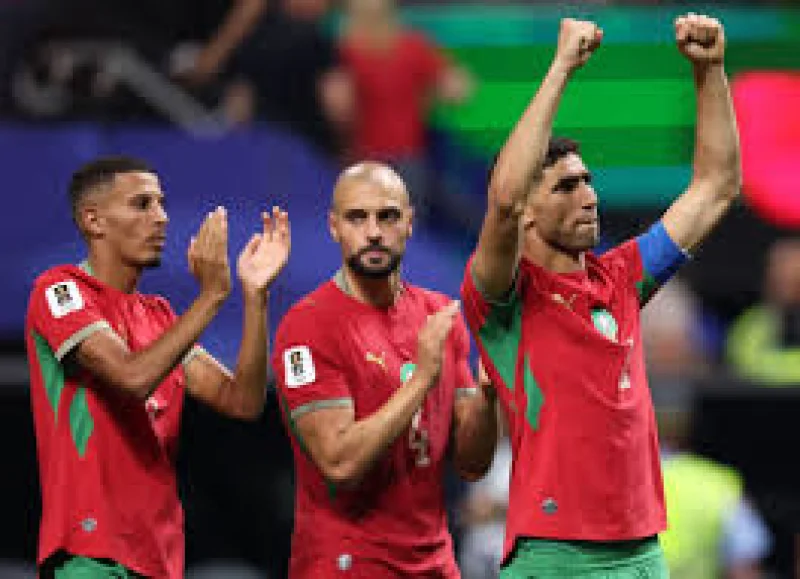
Morocco and the Netherlands meet in Monterrey in a last-32 World Cup tie that feels bigger than an ordinary knockout match. It comes 32 years after their first official encounter, a reminder that this is a rivalry built over time as much as on the field.
The timing matters because both sides arrive with the kind of form that makes the bracket sit up. Morocco drew 1-1 with Brazil in its Group C opener and finished the group stage with seven points, as did the Netherlands, with both teams inside Fifa’s top 10. That is why this meeting has drawn so much attention: it is not a case of one side arriving as an outsider and the other as the clear favourite.
For Morocco, the setting also pulls history into the present. The country played most of its 1986 World Cup campaign in Monterrey and became the first African team to progress through the group stage there. The Netherlands won the 1994 World Cup group game in Orlando 2-1, but the next chapter in this story now lands in Mexico again, with both teams carrying a different kind of weight.
That weight is not only sporting. Moroccans began moving to the Netherlands in the 1960s, and the match has been framed as the point at which street football between Dutch and Moroccan kids in Amsterdam’s neighbourhoods has arrived on the world stage. Hassan Bahara has said he wishes the two teams were meeting later, after both had shown more of what they could do, because this game carries a layer of meaning that would not exist against any other opponent.
Morocco’s squad reflects that link. Noussair Mazraoui, Sofyan Amrabat and Anass Salah-Eddine were all born and raised in the Netherlands, and each made a decision to represent Morocco rather than the country where they grew up. Amrabat signed up for Morocco at the Under-17 World Cup in 2013, Mazraoui at under-20 level and Salah-Eddine only a couple of months before the most recent Africa Cup of Nations. Morocco won this year’s Afcon, according to the article, and then went on to reach the semi-finals at the 2022 World Cup in Qatar after beating Belgium, Spain and Portugal.
That history explains why the match is being spoken about in derby terms. Jean-Paul Rison said the feeling is almost that of a derby, but he also drew a sharper line, saying 99 percent of people will be in total harmony and that the part he dreads is how some will fit the game into an agenda of hate. Bahara has gone further, warning that certain right-wing media and Geert Wilders may try to inflame tensions, and saying Wilders wasted no time by posting AI-generated images on social media designed to provoke the Moroccan community.
So the football may start as a knockout tie, but it already carries two possible outcomes off the pitch: a shared celebration or a political flashpoint. What happens in Monterrey will settle one bracket and leave the larger argument over identity, belonging and who gets to claim this match still hanging in the air.
