


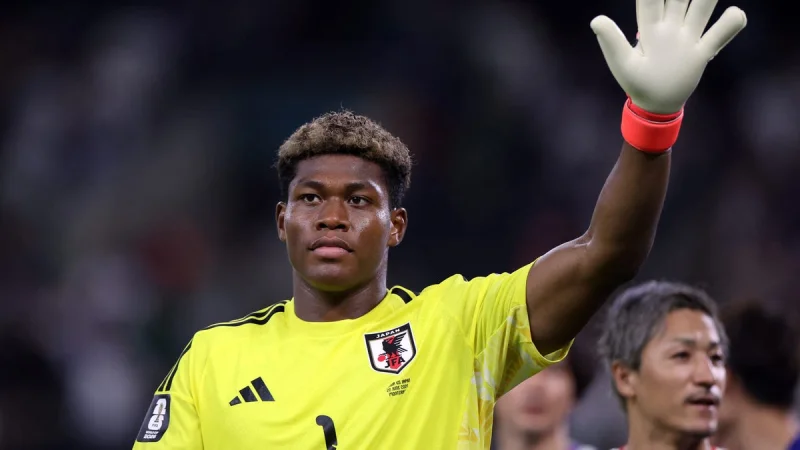
Suzuki Zion is no longer just Japan’s starting goalkeeper on paper. On June 14, 2026, he played his first World Cup match and helped Japan hold the Netherlands to a 2–2 draw at Dallas Stadium in Arlington, Texas.
The performance mattered because it came after a stretch that could have ended his tournament before it began. Suzuki, who was born in 2002 in New Jersey to a Ghanaian father and Japanese mother, had surgery on a broken bone in his left hand after a November 2025 match against AC Milan. He began rehab three days later, working on legwork and the parts of goalkeeping that did not depend on the injured hand, then returned to Parma’s active roster in March 2026 and helped the club avoid relegation.

His path to that moment runs through Saitama, where his family settled soon after his birth in the Urawa district. He grew up watching Urawa Reds home matches and spending time at the club’s practice pitch, joined the Urawa Reds Juniors at 11 in 2013, and signed a professional contract with Urawa Reds at 16 in 2019. After that came Sint-Truiden in 2023 and Parma Calcio 1913 in 2024, while he was already Japan’s main goalkeeper for the January–February 2024 AFC Asian Cup. The search around his name now is about more than a single match: it is about how a player with roots in New Jersey and Saitama became central to Japan’s World Cup run.
There was real doubt around him only months ago. A broken left hand made his 2026 World Cup prospects look uncertain, yet he recovered enough to reclaim his place, keep playing at the highest level, and deliver when Japan needed a result. He is known for his cool demeanor, and for turning pressure on the big stage into motivation, a trait he traces in part to a mother who taught him early to be independent and handle his own affairs. By the time Japan left Arlington with a point, the question was no longer whether Suzuki could get back. It was how far he can carry Japan from here.
