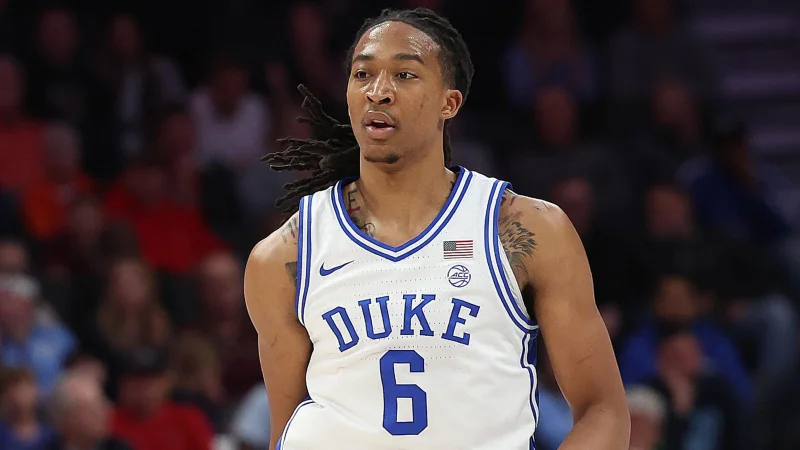
Maliq Brown is headed for the 2026 NBA Draft, and the first thing that stands out is how much his future depends on where he lands. ’ draft guide on Brown makes the case that his next level value will come almost entirely from the right coach, the right roster and the right scheme.
That is why his name is being searched now. Brown has finished his college eligibility, which makes him automatically eligible for the draft, and the discussion around him is no longer about what he was in college but about what an NBA team can actually do with him. In an ideal world for him, he would fall to No. 37, with the Oklahoma City Thunder identified as the kind of team that could unleash him on opponents.
Brown’s path to this moment started long before the draft conversation. He grew up in Culpeper, Va., played football first, then shifted to basketball right before high school after a 6-inch growth spurt between eighth and ninth grade. At Blue Ridge School, he helped a program win the state title in its classification all four years he was there, then drew recruiting interest from ACC schools as a junior and broke out as a senior, winning all-state honors and his division’s player of the year.

He entered the 2022 recruiting class as a three-star recruit and chose Syracuse over Virginia Tech, Penn State and others. Brown became an immediate impact player off the bench, worked his way into starts by the end of his first season and, as a sophomore, started about half of his team’s games while earning a spot on the ACC’s All-Defense team. After that, he transferred to Duke, where he spent two years coming off the bench but playing a significant role.
What has made Brown interesting to NBA evaluators is easy to see. He passes incredibly well, is a diligent screener and does just about all the little things teams ask from a hybrid big. He also has the chance to be a valuable energy player if a club gives him freedom to be ultraaggressive with his hands and tolerates some of the overaggressiveness that comes with it. The catch is just as clear: he still needs answers as a scorer, and that is the piece that keeps him from feeling like a finished NBA rotation player.
That gap matters because Brown’s best-case outcome is built on fit, not on broad upside. He injured his shoulder during ACC play as a junior, Duke missed him during its run to the Final Four, and then he returned as a senior to become one of the best defensive players in the country on arguably the best defensive team in college basketball. He won the ACC Defensive Player of the Year award and the ACC’s Sixth Man of the Year award, then helped lead Duke back to the Elite Eight, where it lost to Connecticut. The résumé is real. The question now is whether an NBA team can pair him with a bigger-bodied center who can shoot 3s and rebound on the defensive end, because that is the kind of setup that turns Brown from a useful defender into a real rotation piece.
That is the narrow lane he has been handed. If the right coach lets him play fast with his hands and the right roster covers the space around him, Brown has a path to value. If not, the same traits that made him so effective in college may leave him stuck as a player teams admire more than they use.