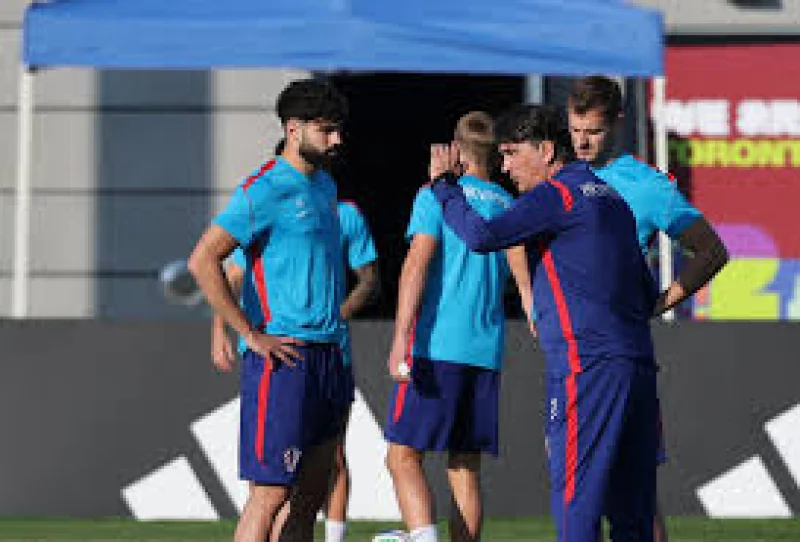
Luka Modric will lead Croatia into their World Cup opener against England on Wednesday night, a rare sight even by the standards of a career that has stretched across two decades and 198 caps. At 40, the captain who made his debut in 2006 is still the face of a team that has made a habit of arriving when the odds look long.
That is why searches for Ante Budimir and Modric are rising now. Croatia's opener begins at 21:00 BST, and Modric remains the player around whom the whole campaign is framed: six Champions League titles with Real Madrid, a Ballon d'Or, a World Cup final in 2018 and third place four years ago. For a country of fewer than four million people, he has become the most successful footballer it has produced.
His career still carries the marks of how it began. He played 130 games for Dinamo Zagreb before joining Spurs in 2008, but the story that made him is older than any club move. He was six when his grandfather Luka was killed by Serbian forces near the Velebit mountains, his family home was burned, his father went to war and the family moved to Zadar, where they lived as refugees in hotels. He was one of the few players in the current squad who lived through the conflict that ran until 1995 after Croatia declared independence from Yugoslavia in 1991.
That background sits behind the image Croatia likes to project. The country was admitted by Fifa in 1992 and by Uefa in 1993, missed out on the 1994 World Cup, then reached the quarter-finals at Euro 96 and finished third at the World Cup in France two years later after beating Germany and the Netherlands. The pattern has been repeated often enough to feel familiar now: a small nation, a hard past and a team that keeps outrunning its size.
What makes Modric different is that he has lived all of it and stayed at the centre of it. Romeo Jozak, who worked with him as a teenager, once said he was “freaking out” over the midfielder's hair and admitted, “Of course, I didn't know he was going to become the Luka Modric down the road.” He remembered needing to fight for authority before Modric eventually cut it, but he also said there is now “a respect” whenever they meet.
That respect comes with a harder truth. Jozak has also said that some players carried relatives killed in the war and that those things stay inside you. Modric's story is not only one of medals and records. It is a reminder that Croatia's football success has been built by men shaped by loss, and he will walk into this opener carrying both the country's hope and its history. The immediate question is not whether the captain belongs on this stage. It is whether, at 40, he can still steer Croatia through the hours that matter most.