


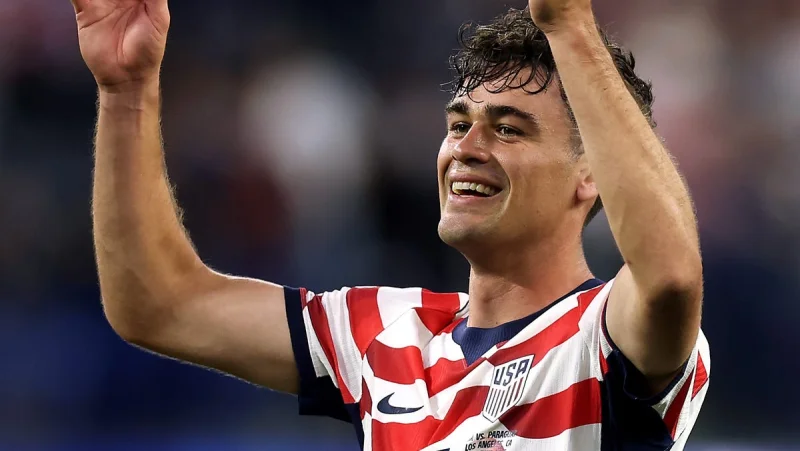
Norway has three players at the 2026 World Cup whose fathers also reached the sport’s biggest stage, turning one team into the rarest kind of family album. Erling Haaland, Kristian Thorstvedt and Alexander Sørloth are all following fathers who played at the 1994 World Cup, and each is now trying to turn that inheritance into results of his own.
That is why the search for Norway Soccer Players has landed here now. The 2026 World Cup is underway, and Norway still has something to play for, which gives this lineage more than sentimental value. It also places Norway in a small class: out of 39 father-son pairings that have appeared in World Cup history, only 14 players in the 2026 tournament have fathers who also played at the event, and Sweden’s Roy Andersson remains the only World Cup player to have had multiple sons appear in the tournament.
The fathers’ records show how varied those paths can be. Two of the elder Haaland’s 34 career international caps came during the 1994 World Cup, but he never managed a goal in international competition. Erling Haaland, by contrast, is already Norway’s all-time leading scorer and opened his first World Cup match by striking twice against Iraq. Kristian Thorstvedt’s father, Erik Thorstvedt, made three appearances as a keeper at the 1994 World Cup, while Kristian came on as a substitute in Norway’s first World Cup game and has four goals in 38 international appearances. Alexander Sørloth followed the same route into the tournament, making his World Cup debut against Iraq after a career that already includes 26 goals in 73 caps.
That is where the clean family story runs into a harder truth. A Sørloth has yet to score a World Cup goal, even as Alexander has built a reputation as a finisher for Norway, and that gap matters because it is the kind of distinction these tournaments expose quickly. Haaland has already answered his side of the family challenge, but Thorstvedt and Sørloth still have to show that the 2026 World Cup will be more than a footnote to what their fathers did three decades ago.
The next step is simple and unforgiving: Norway has to turn those three bloodlines into knockout-stage progress. If it does, this will be remembered as the tournament where a father’s stage became a son’s breakthrough. If it does not, the list of names will still be impressive — just one more reminder that World Cup history does not hand out its echoes on command.
