


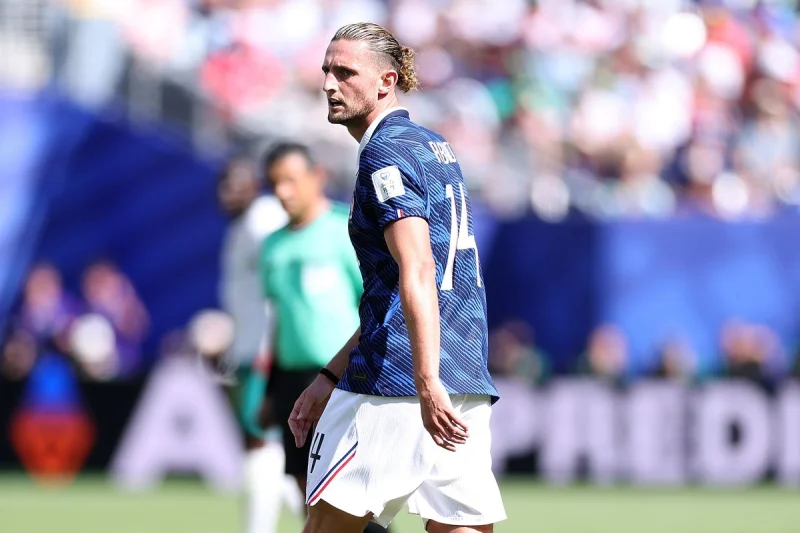
Adrien Rabiot has gone from a player who once refused to be an afterthought to one of France’s most important reasons to believe in a third straight final. Didier Deschamps now needs him to keep doing the one thing he has spent much of his career doing: proving people wrong.
That matters now because France are in the World Cup and the balance of their midfield has become as important as the power of their attack. Rabiot, 29, is not only part of that balance with Aurelien Tchouameni; he has become one of the pieces that lets four key attacking players stay dangerous without leaving France open in the wrong moments.
The turn is striking because it sits so far from where this story began. Eight years ago, Rabiot emailed Deschamps to say he would not accept a place on the standby list for the 2018 World Cup. France won that tournament anyway, grinding their way to glory, and Rabiot watched from outside while Les Bleus completed the job without him.
His path since then has been anything but smooth. Paris Saint-Germain pushed him out after a dispute in which his mother and agent, Veronique, was heavily involved. Yet at Juventus he grew into a different player, and Andrea Pirlo called him complete, a midfielder who could put the technical side and the physical side of the game together. By the time France reached Qatar, he had become a crucial cog rather than a spare part.
That shift is why his value is no longer really a debate. Before the tournament got underway, Kylian Mbappe called him a guy with incredible resilience, saying no matter what gets said about him or what happens to him, he is always there and his CV speaks for itself. Rabiot echoed the logic in football terms, saying with Aurelien, France need to maintain this balance and that they are not restricted by the coach but have to find the right adjustments with the four key attacking players who can make the difference.
The one obvious gap in the run has already shown how much France miss him. Rabiot sat out the last-four win against Morocco because of illness, and that absence underlined how tightly his role is tied to the team’s control. When he is there, France can protect the space behind their attackers and move the ball into areas that matter. When he is not, the balance is harder to hold.
That is why his pass to Bradley Barcola for France’s second goal against Senegal feels bigger than a single assist. It is the sort of moment that shows what he gives this team now: not headline glamour, but structure, timing and a cleaner route through matches that can otherwise turn messy. France’s next step is Norway on Friday, and if they are to keep moving toward that third straight final, Rabiot will be at the center of the equation again.
Adrien Rabiot sees a more attacking France — but balance remains the test
