


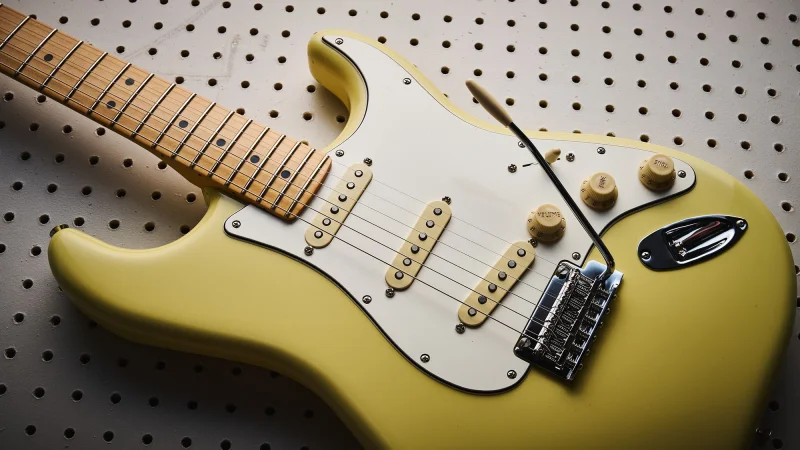
Thomann has sued Fender after the US guitar maker sent cease-and-desist letters through Bird & Bird to manufacturers and retailers of S-style guitars across Europe and the US. The move turns a dispute over the Stratocaster body shape into a court fight between two companies that have worked alongside each other for decades.
The fight now matters because the letters were not limited to one corner of the market. They demanded that recipients stop making and selling the guitars, recall instruments already sold and turn over customer and sales data. PRS and several smaller American luthiers said they received one of the letters, and Thomann says its Harley Benton brand is caught up as well.

Thomann was founded in 1954, the same year Fender launched the Stratocaster, and it says it has carried Fender in its catalog for more than 70 years. That long relationship is part of why the retailer says the current campaign has landed so hard. Thomann argues that Fender is trying to enforce rights over a shape that became famous because it worked: the upper horn, cutaways and body contours that made the guitar easier to handle and helped define its look.
The legal backdrop came from Düsseldorf Regional Court, where a default judgment in December 2025 said the Stratocaster’s body shape counts as a copyrighted work of applied art. The defendant in that case was a Chinese seller shipping nearly identical copies into Germany via AliExpress, and Fender has treated that ruling as a basis for its enforcement letters. But the company’s public line has been different. In mid-June, Fender CEO Edward “Bud” Cole said the company wasn’t suing anyone, even as Thomann says the letter campaign is reaching manufacturers and retailers in Europe and the US.
That gap is where the case gets sharp. Fender says it is not bringing lawsuits, while Thomann says the pressure campaign is already real and already broad. Thomann also argues that the Stratocaster body shape has long been considered public domain in the US, and it points to Eddie Van Halen’s Frankenstrat as proof that free experimentation helped create the SuperStrat tradition around it. The immediate question is no longer whether Fender can threaten the market; it is what legal claims Thomann is making now that it has dragged Fender into court.
