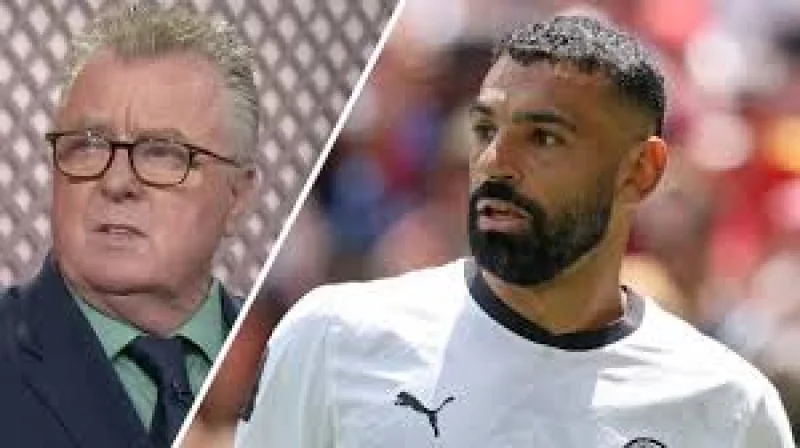
Mohamed Salah turned 34 on Monday, the same day Egypt faced Belgium, and the milestone underlined a simpler truth about him now: he is still a match-winner, but no longer the sort who can be left to improvise every attack alone. The speed that once made him such a frightening opponent has faded, and the cleaner reading of his game is that he is increasingly a player for moments, waiting for the right opening before he pounces.
That is why the search around M Salah never really stops. He remains one of the sport’s most recognizable forwards, but the way he works best is not mysterious. At Liverpool, he needs Trent Alexander-Arnold behind him threading passes quickly, Roberto Firmino buzzing around him and hard-runners in midfield creating space. With Egypt, the names change and the principle does not. He needs Emam Ashour to be on point, Marwan Attia agitating beside him and Mohamed Hany to spring forward from right back. Strip away that support and the job becomes harder by the minute.
Egypt have not qualified for the World Cup since 1990, which gives every discussion about Salah extra weight. He is not being judged in a vacuum. He is being judged against the question of whether he can help carry Egypt into the tournament for the first time in decades, while also adapting to a stage where he can no longer overwhelm teams on raw pace alone. Lionel Messi offers the clearest reminder of what that kind of elite career can still look like: he lifted the World Cup as Argentina’s captain in 2022, on his fifth attempt, after years of trying within a structure that finally suited him.
In Seattle against Belgium, Egypt went with a shape similar in possession, and Salah pushed up beside Omar Marmoush in attack rather than operating from the right flank. That was the practical expression of the idea around him: move him closer to goal, reduce the burden of carrying the build-up, and let the game come to him. Yet the same match also exposed the friction in the plan. Salah can educate others about how elite football works, but once the whistle goes he cannot do it all by himself. A smarter structure helps, but it does not erase the need for sharp teammates making the right runs at the right time.
That is also why his role at Liverpool last season matters to the wider conversation. He was on the periphery in a lot of games, and the attack was re-centralised around Florian Wirtz, while Arne Slot did not think Salah should be tried as a centre forward. The message in both club and country is the same: his value is still immense, but it now depends on the pieces around him as much as on the finish at the end. Egypt may keep testing that idea, but the next question is not whether Salah has lost his edge. It is whether the team around him is built to catch what remains of it.