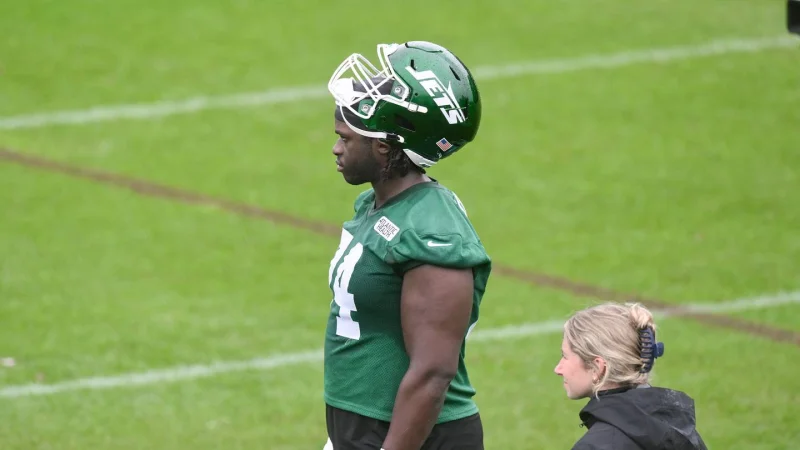
Geno Smith is changing the way the New York Jets have to think about their edge protection, and that matters most for Olu Fashanu. With Smith leading the huddle this year and a new play-caller in place, the line is being asked to prepare for a more pocket-based offense instead of one built around a rushed, run-first script.
That is why Fashanu’s name keeps coming up now. The left tackle posted one of the better pass-blocking grades at his position last season, but his run-blocking numbers left much to be desired, and the 2025 Jets offensive plans were a bad fit for his skill set. The change at quarterback and play-caller puts him in a better position to succeed over the short term and the long term because the assignment shifts away from repeatedly exposing his weaker side.
Fashanu played left tackle for the Jets and handled 634 pass blocking reps last season, giving up six sacks, 39 pressures and five quarterback hits. Those numbers show both sides of his game: he held up well in protection, but the run game asked more than he was ready to give. When a line spends that much time protecting, its demands are defined less by brute force and more by the ability to stay connected to a moving pocket and respond quickly to pressure from both edges and the middle.
That is where Smith changes the calculation. Fashanu said that from his and Armand Membou’s perspective, having more of a pocket passer like Geno means they need to be more aware of outside rush and inside rush. It is a different job than the one they were doing before, when the run-centric approach and a limited quarterback throwing the ball put Fashanu’s biggest weakness on full display at times. New York’s offensive line had Justin Fields’ average time to throw at over three seconds last season, a pace exceeded only by Caleb Williams and Brock Purdy, which only added to the strain on the tackles.
The Jets now have two stalwart tackles on rookie contracts who are developing at a positive rate, and that gives the offense a cleaner base than it had before. Fashanu and Membou are still being judged by how well they protect Smith now, not by how well they can force an old scheme to work. If the new setup holds, the line’s future will be measured less by how often it can survive long, awkward plays and more by whether it can keep Smith clean when the rush comes from both sides at once.