


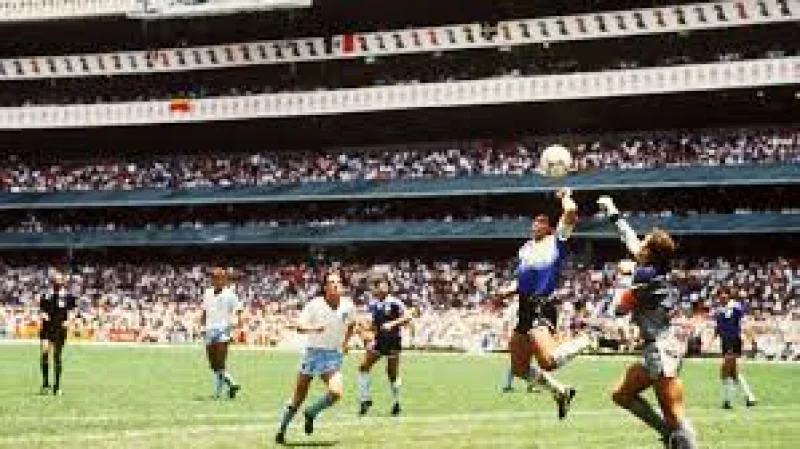
Diego Armando Maradona scored two of the most famous goals in football history against England on 22 June 1986, and the first one still split a stadium in real time. At Estadio Azteca, in the World Cup in Mexico, the match that finished 0-0 at halftime exploded six minutes into the second half when the Argentina forward leapt for a high ball beside Peter Shilton.
For Laura Heredia, then 17 and at her first football match, it was not just a goal but a shock that filled the stands. She had gone with her mother after her father called that day to say a friend had two unused tickets, and she later said she was more interested in seeing attractive men from around the world than in football.

What made the moment endure was the argument that followed it. Shilton went to punch the ball away with a closed fist, Maradona attacked it with his head and his hand, and people inside the stadium immediately disagreed over which contact had mattered. That dispute turned the goal into the 'mano de Dios', a name that captured both the deception and the disbelief in the same instant.
The second goal carried a different kind of force. It was not a scrambled finish or a referee’s call; it was the kind of solo move that, by definition, becomes a reference point because it is remembered for the path as much as the result. Maradona’s two strikes against England are still paired because they show the two sides of his legend: the goal that caused a fight in the stands and the goal that left no room for argument.
The match also sits inside a larger tournament arc for Argentina, which had reached the quarterfinals in Mexico before losing on penalties to Germany Federal. That ending matters because it places the England match exactly where it belongs in football memory: not as an isolated flash, but as the night that helped define an entire World Cup and kept Maradona at the center of it 40 years later.
