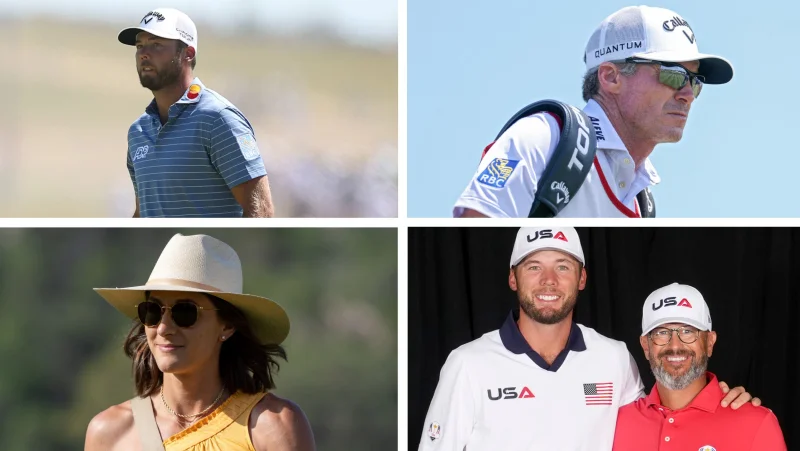
Sam Burns turned the final round of the U.S. Open Championship at Shinnecock Hills into a race. He opened with four birdies in eight holes, climbed from even par to second place at minus-4 and cut Wyndham Clark’s lead to one stroke before the round was halfway done.
That surge is why the 29-year-old was drawing attention in real time. Burns began the day seven shots back and was chasing his first major victory and sixth win as a professional, while also trying to shake a season that had not yet produced a victory in 2026.
Burns entered the day with enough form to make the climb believable. He had seven top-25 finishes and three top-10s in 2026, and he had made 11 cuts in 14 events. He also arrived off a steady week at the U.S. Open, after rounds of 71, 68 and 71 had kept him in range of the leaders.
There was also a family thread running through the round. Burns and Caroline Burns were expecting their second child in July, and the timing gave his run an added layer of meaning. The couple had known each other since they were young children, began dating at Louisiana State University and later built a family that already includes Bear, their two-year-old son, who will become an older brother later in the summer.
That personal backdrop did not change the math on the course. Burns was still trying to turn a hot start into a title, and the gap between a strong round and a major breakthrough remained the same one at the top of the board: whether he could keep pace with Clark for the rest of the day. He was also not just playing for the trophy. The U.S. Open purse was $22.5 million, with $4.5 million for the winner and $2.43 million for second place.
Burns has lived this kind of pressure before. He finished tied for seventh at Oakmont Country Club last year, ranked 30th in the world heading into this week and carried career winnings north of $38 million into the championship. But the chance in front of him was bigger than any single week. If the fast start held, he would turn a promising opening into the kind of Sunday charge that can reshape a season. If it did not, the scorecard would still leave the same unresolved question: whether the best golf of his year came just short of the one prize he has not yet won.