


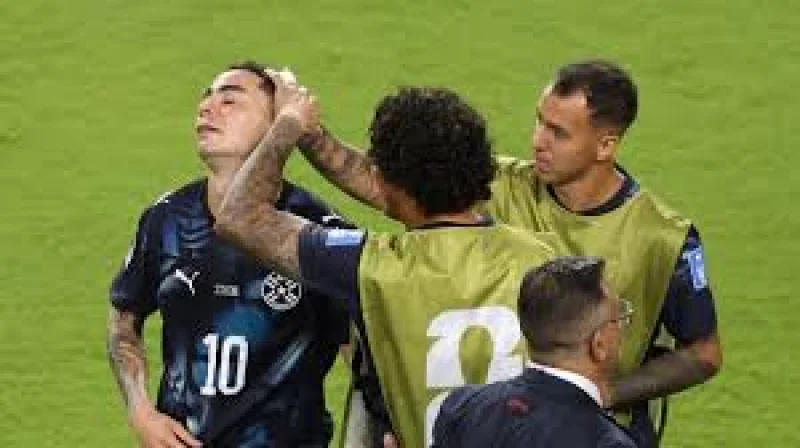
Pierluigi Collina has changed how time is managed at the World Cup, and the match clock is feeling it. His new rules on goal-kicks, throw-ins, substitutions and treatment stoppages are designed to keep the game moving and limit wasted time.
The figures show they are already doing that. At this tournament, ignoring hydration breaks, matches are averaging 96 minutes, a sharp shift from Qatar, where games lasted more than 100 minutes on average. Ahead of the finals, Collina said the goal was to increase the tempo of the match, and the new approach is built around that idea rather than simply tacking on more minutes at the end.
Under the current system, referees count down five seconds before goal-kicks and throw-ins, substitutions are timed with a 10-second clock, and players who need treatment must stay off the field for one minute. The pressure is on teams to move faster, and the early evidence suggests most have adjusted. Players now leave the field within 10 seconds, and only one goal-kick has been changed to a corner.
There has been one clear test of the new standard. DR Congo took too long during their 1-1 draw with Portugal on Wednesday, showing how quickly a routine restart can turn into a sanction if a side stalls. But the tougher part of the system has not yet been fully tested in the way many expected: there have been no cases of a substitute being barred from entering because the player going off took too long to leave. That leaves one part of the crackdown as a rule that is present on paper and visible in the countdowns, but not yet decisive in the outcome of a match.
That matters because Collina has been trying to find more time for actual play without turning the sport into a parade of stoppages. He moved away from the last tournament, when referees were told to add absolutely everything on. Now the balance has shifted toward faster restarts and tighter control of delays, with the hope that the game itself, not the clock, sets the rhythm.
The real question is whether these shorter matches will hold through the rest of World Cup 2026. If the current average stays near 96 minutes, the change will look less like a one-off experiment and more like a new baseline for how Fifa wants the game managed.
