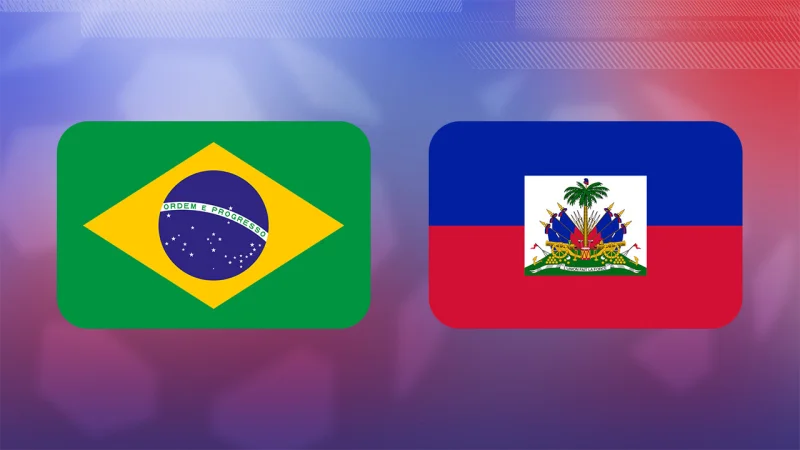
Haiti met Brazil in Philadelphie at 0h30 TU in the night from Friday to Saturday, with the two sides opening the second day of the Coupe du monde’s groupe C in a match that carried more history than most group-stage games ever do. For Haiti, it was not just another fixture. It was a first chance in this World Cup to test themselves against the team many Haitians have spent years admiring from afar.
The timing made the meeting matter even more. Brazil had already dropped two points against Morocco, so the pressure was already there before the kickoff in Philadelphie. Haiti, meanwhile, came in with a record that left little room for comfort: three previous defeats against Brazil, including a 7-1 loss in the Copa América and friendly defeats by 6-0 and 4-0, for a total of 17 goals conceded and only 1 scored.
Carlens Arcus captured why this game felt different in Haiti. He said he remembered people back home fighting to watch Brazil matches, especially when Brazil played Argentina, and described the chance to face them in a World Cup as incredible. That memory helps explain the pull of this matchup: Brazil is not just an opponent for many Haitians, but the side they grew up supporting, the standard they watched when their own national team was not there.
That admiration was visible in the words around the match. Sébastien Migné said many of his players admire Vinicius and must push themselves beyond their limits against that kind of player. Marie Sophony Louis was even blunter, saying Brazil means a great deal to Haitians and has long been the team they supported, almost as a substitute national side. She added that many Haitians would prefer a draw, which is the clearest sign of how high the emotional stakes had become.
Brazil did not dismiss the challenge. Gabriel said the match against Haiti would not be easy, and Carlo Ancelotti described Haiti as a well-organized team with a compact block, adding that all teams had to be respected. That is the basic problem Haiti faces in Philadelphie: admiration does not stop the clock, and organization alone does not erase the gap in history. Brazil’s previous dominance over Haiti is built into the conversation before the ball is even touched.
What happens next is straightforward even if the result is not yet known: Haiti must try to turn long-held respect into competitive resistance against a side that has beaten them three times already. If they can keep Brazil under pressure, the draw Marie Sophony Louis said many people would accept may become more than a wish. If they cannot, this will remain a night remembered less for the score than for the fact that Haiti finally stood across from the team it grew up worshipping.