


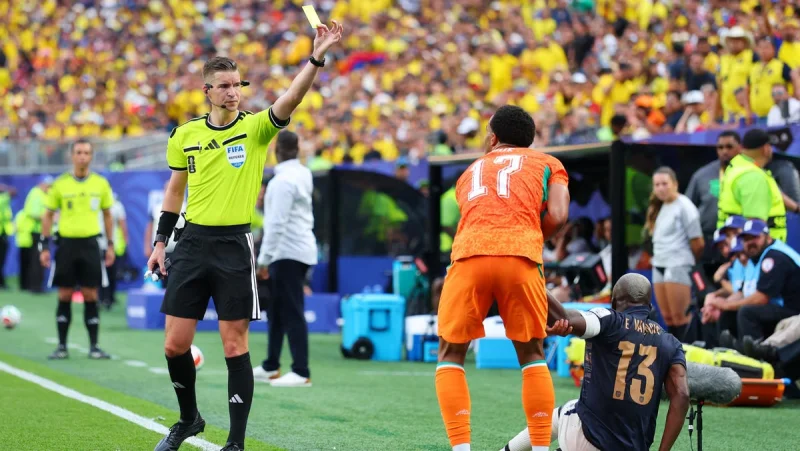
FIFA will wipe yellow cards clean twice during the 2026 World Cup, giving players a fresh start after the group stage and again after the quarterfinals. The change matters because the tournament has grown from 32 teams to 48, adding more matches and more chances for suspensions to shape the knockout rounds.
That is why players, coaches and bench personnel are paying attention now. A yellow card still sits on a player’s record and a second booking in the same game still brings an immediate sending-off, but a player carrying a yellow out of the group stage will enter the knockout phase fresh under the new system. The same reset happens after the quarterfinals, cutting off the buildup of cautions before the final stretch of the tournament.
FIFA’s move also comes with a tighter rule book for red cards. A player can still be dismissed for a dangerous foul, violent conduct, spitting, biting, offensive language or denying a clear goal-scoring opportunity. A red card means the player is done for the day, the team cannot replace him, and an automatic one-game suspension follows. Coaches, substitutes and other bench personnel can also be shown yellow cards.
The new rules go further. FIFA added a send-off for a player who covers his mouth during a confrontation, and another for a deliberate walkoff to protest a referee’s call. The mouth-covering rule was prompted by February Champions League scenes involving Gianluca Prestianni and Vinicius Junior, while the walkoff rule was shaped by January Africa Cup of Nations final events in which players left the field for nearly 15 minutes. FIFA also said coaches or team officials who encourage players to walk off can be covered by the same rule.
That leaves one practical question hanging over the tournament: how often will those new red-card triggers be used in 2026? The reset system is designed to reduce the chance that a player misses a crucial knockout match because of caution accumulation, but it also gives FIFA a bigger stage on which to police conduct that can spiral fast in a match with 10 men and heavy pressure. The next time the rules will matter is the 2026 World Cup itself, when the expanded field and the two resets will decide who stays available and who is suddenly out for the team’s next match.
