


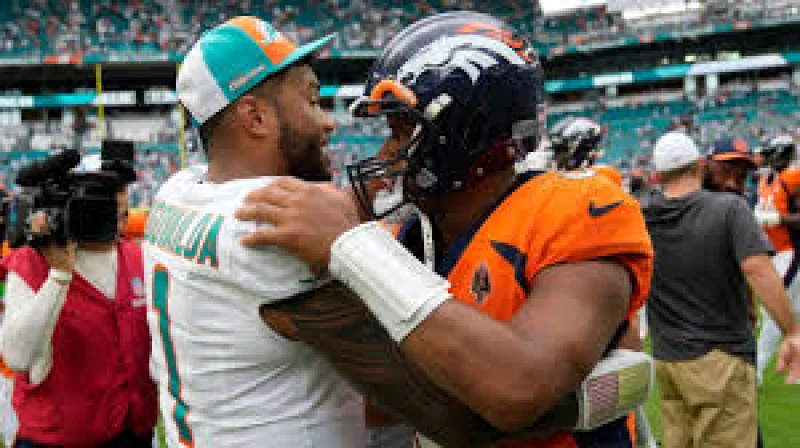
Jeff Legwold of put a fresh question to 11 NFL coaches and personnel executives: did the Miami Dolphins follow the Denver Broncos' path after the release of Russell Wilson? Many of them said yes, and the timing matters because Miami's offseason cleanup has already produced a league-record $179 million in dead cap charges.
The comparison is not just academic. The Broncos took $85 million in dead cap when they moved on from Wilson two offseasons ago, then went 24-10 in regular-season games over the next two years, made the playoffs twice and reached the AFC Championship Game this past January. That run has turned a painful cap decision into a possible blueprint, which is why Wilson's name keeps coming back when Miami's roster purge is discussed.
For Miami, the scale is what makes the story land. Cutting Tua Tagovailoa accounted for $99.2 million of the dead-cap total, and the club also signed Malik Willis this offseason while collecting more than $21 million in post-June 1st savings earlier this month. That is the kind of roster math that can look reckless in April and strategic by the time the next cap cycle opens.
Jon-Eric Sullivan is living through that math from Miami's side, because he is tied to the team that now sits on the league's biggest dead-cap bill. The question around him is not whether the Dolphins spent heavily on dead money; they did. It is whether that spending was a one-year shock or a deliberate reset meant to buy flexibility later.
That is where the Broncos example matters most. Legwold said many respondents saw Miami's offseason as a progression of what Denver did two years ago, not a copy in every detail but a familiar willingness to absorb pain now in exchange for a cleaner future. Spotrac currently projects Miami to have nearly $114 million to spend in 2027 if it chooses to do so, which is the number that makes the gamble sound less like surrender and more like timing.
Miami does not need the Broncos' exact outcome to make the move defensible. It needs enough wins, and enough cap room, for the dead money to look like a bridge instead of a mistake. If the league's record dead-cap charge is the price of that reset, the Dolphins have already made the bet; what remains is whether they can turn it into the kind of turnaround Denver produced after Wilson was gone.
