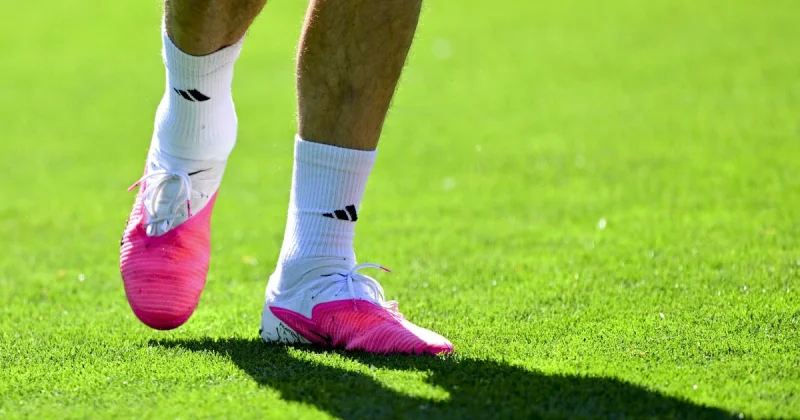
Hot pink has become the World Cup’s most visible unofficial colour this week. Dominik Livaković appeared in it, officials wore shirts that matched his kit during Saudi Arabia’s match against Uruguay, and players from Croatia and England turned up in pink boots as the shade spread across the tournament.
The sight is hard to miss because it is not isolated. Dozens of players are now wearing pink boots from Nike, Adidas, Puma and New Balance, and one football magazine summed up the effect bluntly: everywhere you look, the boots are pink, from fluoro to hot pink to fuchsia. Once it is noticed, it is everywhere.
That is exactly why the colour is being searched now. Bright pink is not just a fashion flourish; it is working as a branding tool in a tournament where every detail is magnified. Sara Maggioni said pink is one of the most influential colour stories of the past decade, and she pointed out that younger fans may be watching matches on their phones, where a strong colour is easier to catch at a glance. On grass, pink also pops. Against green, it reads faster than many darker shades.

The numbers back up the shift. In the 2019-20 season, one newspaper counted 636 Premier League goals scored by players wearing pink boots, compared with 36 goals for players in black footwear. That gap does not prove pink makes players better, but it does show how far the colour has moved from novelty to normal. Arsenal introduced a baby pink third kit for the 22-23 season. Inter Miami has worn pink since 2022, and Lionel Messi wore it in 2023, after which the club’s shirt sold out almost instantly. Three years later, that Pantone 1895C shade is familiar far beyond the club’s own fan base.
Still, pink carries more baggage than most colours in football. Odinga Nimako said the game has reached a tipping point for brighter shades, but he also said a loud colour like pink demands a player who can carry it. Andrew Groves traced the longer arc: Everton wore pink in 1892 without controversy, and the colour only became loaded later, first through consumer culture and then through a football culture more anxious about masculinity, tradition and how male players were supposed to look. That history is part of the appeal now. Pink is broad enough to sell, bright enough to stand out and bold enough to feel deliberate.
WGSN predicted in 2024 that bright pink, or electric fuchsia, would return this year, and this World Cup is giving that forecast a live test. The unanswered question is not whether pink has arrived in football. It has. The question is whether this week’s hot pink moment becomes a lasting kit language, or fades once the tournament moves on and the next colour takes over.