Soccer’s offside rule still turns on a split second, and that is why close calls keep coming back into the conversation. Richard Richie Tovar, who has more than 13 years of experience in the field, has watched the same problem persist even as the tools around it have changed.
An attacker is offside when he is in the opponent’s half, closer to the goal line than the ball, and ahead of the second-to-last defender with any part of the body except the hands and arms when a teammate plays the pass. The call is made at the exact moment the pass leaves the passer’s foot, not when the receiver reaches the ball, which is why timing is everything between the two players.
That single instant is what makes the soccer offside rule so hard to judge in real time. If the attacking player has already crossed the imaginary line of the last defender before the ball is released, the whistle should go up. If the run starts a fraction too early, the move is finished before it even develops. The receiver should ideally start the run right after the ball is kicked, but in practice that line can be almost impossible to see cleanly from the field.

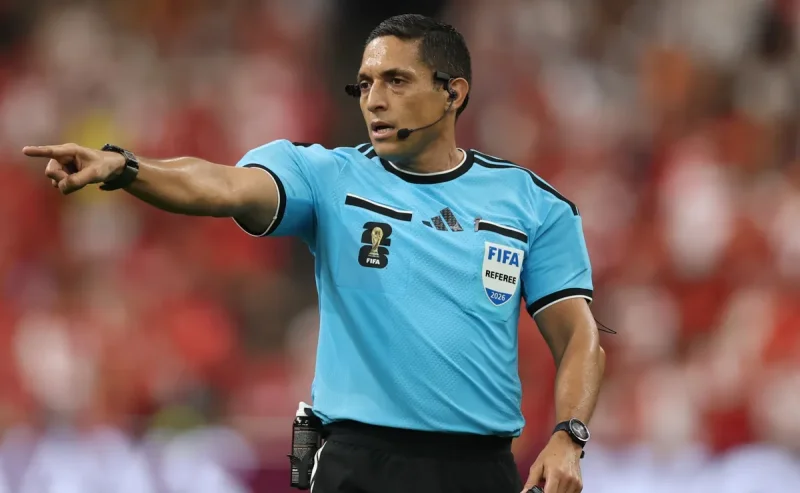
For that reason, the rule still depends heavily on human judgment from the main referee and the assistant referees on the sidelines. Even with Video Assistant Referee technology now used in almost all international tournaments, domestic leagues, and the World Cup, the final judgment often starts with a person’s eye, then moves to high-tech cameras for a closer look. VAR can make millimeter-accurate decisions on crucial goal-scoring moments, but only after officials decide there is enough reason to review the play.
That is where the friction lives. A system built to remove doubt still leans on the same people who have always been asked to read a moving pass, a moving runner, and a moving line all at once. In many matches, the answer is clear. In others, the difference between onside and offside is measured by a body part and a frame of video, and the call still feels as much like judgment as technology.
What happens next is usually a review of the controversial play, with the officiating crew checking whether the attacker was ahead of the line at the exact moment the ball was played. That is the heart of the soccer offside rule today: a simple definition, a difficult instant, and a decision that can change on the smallest possible edge.