


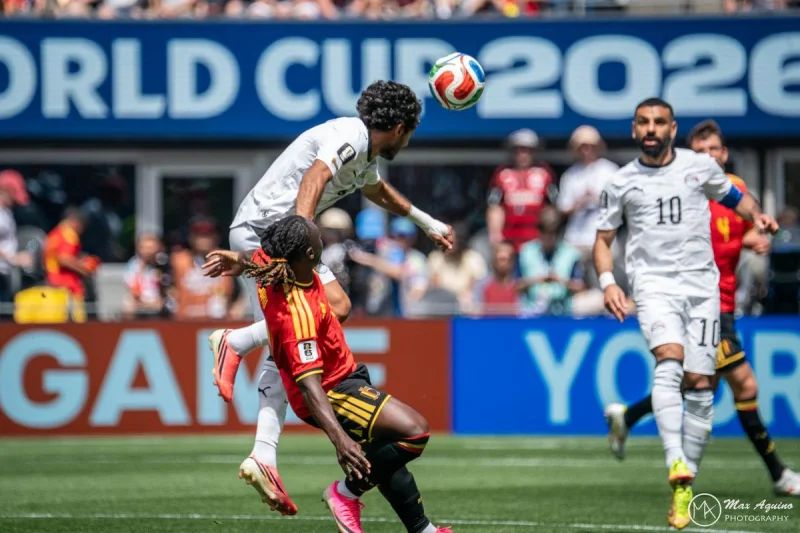
Belgium and Egypt opened Group G with a 1-1 draw in Seattle, a result that left both sides with one point and neither with control of the section after the first match. Egypt struck first in the 19th minute, then watched Belgium level the game before full time on Monday afternoon under the Seattle sun.
The goal that put Egypt ahead came from Emam Ashour, who finished a central run from the left wing after Mohamed Salah picked out a pass through the heart of Belgium’s team. Salah, playing as the No. 10, was central to Egypt’s attack again, logging 35 touches and creating three chances, while Omar Marmoush led the line for 90 minutes. Belgium answered with the experience of Kevin De Bruyne in the 10 role and Laurent Courtouis in goal, and both were involved in a match that never fully broke open.
What gave the draw its shape was not volume, but restraint. Belgium spent long stretches unable to produce genuine threat, and Egypt looked comfortable enough to carry its lead deep into the game. Yet the margin held only until a second-half moment when Courtouis made a reaction save to deny Salah on a header, one of his pair of saves, before Belgium found its equalizer and escaped with a point. De Bruyne created two chances, and Leandro Trossard and Youri Tielemans matched Salah’s three chances created for the evening.
That balance matters because both teams arrived with different burdens. Belgium has lived for years inside the story of its Golden Generation and the expectations that came with it, while Egypt has often been framed almost entirely through Salah. Hossam Hassan has tried to push Egypt toward a broader identity, and the opener showed both the promise and the limits of that shift: Salah still drives the attack, but Ashour finished the move, and the team still did not turn an early lead into a win.
For Egypt, the point is useful and the performance was not wasted, but the missed chance will sting because the game was there to be won. Belgium avoided an opening defeat, which is the minimum a team with its history usually demands, yet the draw also keeps alive the old question around whether the Golden Generation can still turn possession and pedigree into results when the tournament pressure arrives. The next test in Group G will show whether this was a steady beginning or another familiar hesitation.
