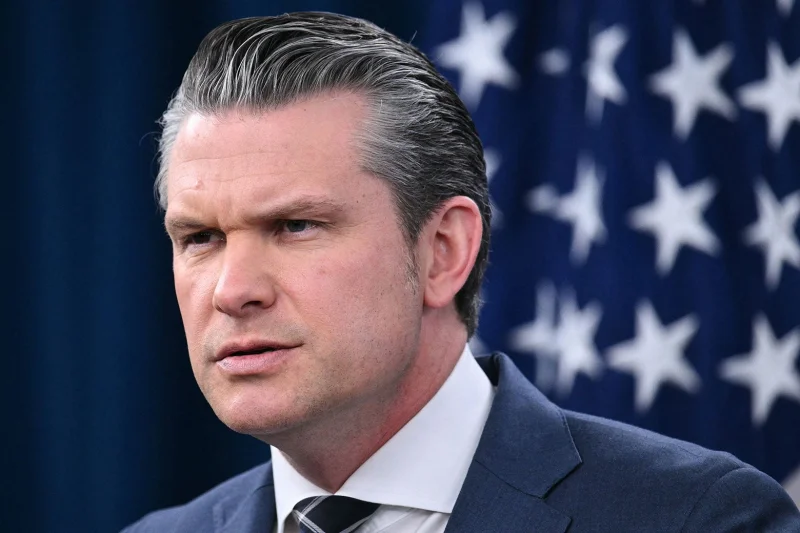
Pete Hegseth has personally blocked promotions in the U.S. military, and many of the cases involved minorities and women. The move is feeding concerns inside the force that the leadership changes now under way are not just symbolic, but are shaping who gets to advance.
The timing matters. A little more than a year after Hegseth took charge at the Department of Defense in January 2025, the effects are still spreading. He had already called “Our diversity is our strength” the “single dumbest phrase in military history,” declared Black History Month “dead,” and fired the military’s highest-ranking Black officer, Gen. Charles Q. Brown, within days of taking the job. Since then, more Black officers have been let go or have simply walked off the job, and the blocked promotions have only sharpened the sense that the officer corps is being remade from the top down.
Clint Smith said in recent months he had been trying to understand what it is like for Black service members to report to a secretary of defense like Hegseth, and his answer was blunt. He said that decimating the officer infrastructure — the long-serving leaders who mentor younger service members — would have “a profound impact on the long-term landscape of what the military looks like.”

Smith also said some Black service members saw the changes as an attempt to reconstitute Jim Crow within the military. That fear is not abstract. The military has long presented itself as one of the first integrated institutions in the U.S., which is why personnel decisions that appear to target Black officers, minorities and women carry such weight well beyond any single promotion list.
There is another break point inside that larger unease. Smith said some service members told him they would leave if ordered to deploy to a U.S. city to quash a protest, while others said they would stay and try to carry out such an order respectfully rather than “trying to bash skulls.” That split shows a force already wrestling with loyalty, restraint and what obedience should mean if the order itself feels like a test of conscience.
What remains unanswered is how many promotions Hegseth has blocked and which officers were directly denied advancement. But the direction of travel is clear: more Black officers are out, promotion paths are being narrowed, and the long-term cost is likely to be paid in the bench strength of the military’s next generation of leaders.