


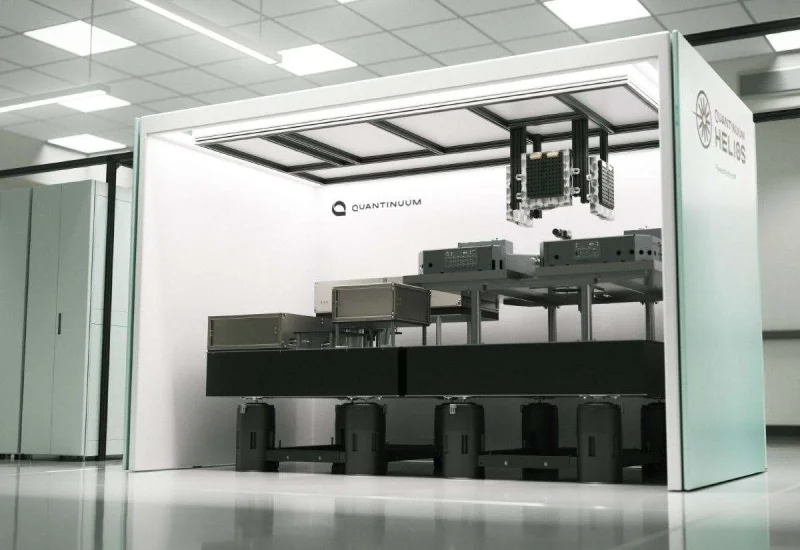
Rigetti Computing shares fell nearly 9% on Tuesday as investors reset their expectations for quantum stocks after Quantinuum’s Nasdaq debut and $15 billion valuation. The move was not isolated. IONQ and QBTS also slid in the same session, showing how quickly a new public benchmark can ripple through the sector.
Quantinuum raised about $1.68 billion in an upsized initial public offering, making it the largest publicly traded pure-play quantum computing company and forcing traders to compare every listed name against a fresh yardstick. That matters because valuation, not just technology, is driving the tape today: shares of RGTI had already lost 6.9% year to date even before Tuesday’s drop, while the broader industry had declined 11.4% over the same stretch.

The market’s enthusiasm for Quantinuum sits beside a harder set of numbers. Japan’s RIKEN research institute accounted for roughly 60% of Quantinuum’s 2025 total revenues of about $30.9 million, and the company posted a net loss of nearly $193 million that year. Investors are therefore pricing a company with a towering public valuation against a business that still has a narrow revenue base and a deep loss profile.
Rigetti has been trying to make the case that its own path is advancing. In the first quarter of 2026, it delivered revenues of $4.4 million, up nearly 199% year over year, and ended the period with approximately $569 million in cash and no debt. Its 108-qubit Cepheus-1 system is generally available across Rigetti Quantum Cloud Services, Amazon Braket, Microsoft Azure Quantum and qBraid, and the company says it aims to reach quantum advantage within roughly three years through a 1,000-plus-qubit, high-fidelity architecture.
That target is the real test now. Quantum advantage would mean a system can solve a useful problem better than classical computers in a way customers can measure, not just admire on a slide deck. With Quantinuum setting a $15 billion marker, Tuesday’s selloff looks less like a verdict on Rigetti’s fundamentals than a reminder that the market is no longer rewarding promises evenly across the field.
