


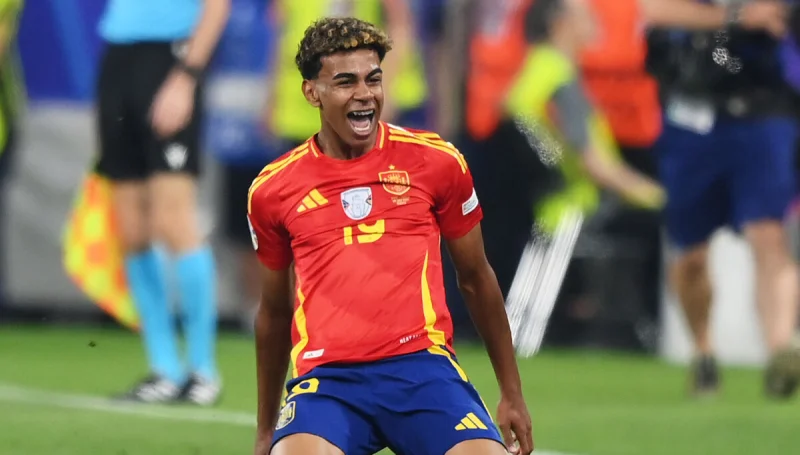
The 2026 World Cup is set to carry a familiar argument onto football’s biggest stage. England’s Bukayo Saka, France’s Kylian Mbappé and Ousmane Dembélé, Spain’s Lamine Yamal, Belgium’s Jérémy Doku and France’s Rayan Cherki are among the African-descended European players expected to feature when the tournament begins.
That matters now because the event is close enough for the names to matter and because the tournament will involve 48 countries, widening the pool of players and the spotlight on identity. Jordan Ayew has also been the subject of interest around Leicester After 10-Player Clearout, but the larger football conversation here is not about one transfer or one squad move. It is about who gets counted as belonging when the world is watching.
European players of African ancestry have been appearing at the World Cup since the 1930s, long before social media turned every miss and defeat into a public referendum. Raoul Diagne, whose roots were in Senegal, was France’s first Black player. Mozambique-born Eusébio da Silva Ferreira moved to Portugal in 1960, played for Portugal at the 1966 World Cup and won the Golden Boot there. Those names are part of the same history that now reaches Saka, Mbappé, Dembélé, Yamal, Doku and Cherki.
The modern scale of that history was visible in the 1990s when France won its first World Cup on home soil with Zinedine Zidane, Patrick Vieira and Marcel Desailly in the squad. That team became known as Black-Blanc-Beur, yet Jean-Marie Le Pen still said the champions were not truly French. The same suspicion has returned after defeats in later years. Aurelian Tchouaméni and Kingsley Coman were abused online after France lost to Argentina at the 2022 World Cup final, and Mario Balotelli faced a similar wave after Italy went out in the group stage at the 2014 World Cup.
The pattern is hard to miss. White players with roots outside their European nations almost never draw the same treatment, even though their own family histories can be just as mixed and international. Fatima Nasraoui knows what migration looks like from the other side of the equation: she rode a ferry from Tangier to Spain in 1990 and eventually settled in Barcelona. The next question is not whether the 2026 World Cup will include African-descended European players. It will. The question is whether football has moved any closer to judging them by what they do on the pitch rather than where others decide they come from.
