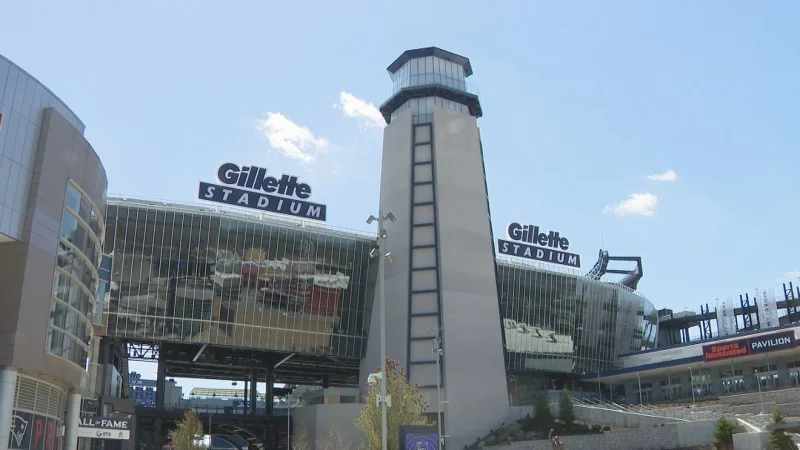
Kraft Sports and Entertainment LLC and the New England Patriots sued the town of Foxborough on Tuesday, accusing it of using Gillette Stadium’s entertainment license to pull money out of the companies by force. The complaint, filed in Norfolk Superior Court, says the town went beyond its legal authority and turned the renewal process into an illegal tax.
The filing landed on the same day Foxborough was hosting a World Cup game between Iraq and Norway, which made the dispute impossible to miss in the place where the stadium license matters most. That is not a minor backdrop. The same license governs the events that bring the crowds, and the money, to Gillette Stadium in the first place.
At the center of the suit is a familiar but larger fight over who pays for major events. In March, Foxborough’s Select Board members threatened to withhold the entertainment license needed for seven matches at Gillette Stadium unless the Kraft Group paid $7.8 million up front for security costs. The pressure eased after the Kraft Group pledged to underwrite those costs, but the new filing says the town came back in April with another round of fees, this time about $1 million in new administrative charges tied to the World Cup renewal.
The math is part of what gives the case its force. The lawsuit says Foxborough is allowed to charge no more than $100 annually to renew the stadium’s entertainment license, which puts the town’s new demand on a different scale altogether. A request for about $1 million is not just larger than $100 a year; it is ten thousand times greater, and the plaintiffs say that gap is proof the town is using licensing power as a revenue tool rather than a regulatory one.
Foxborough pushed back in a statement posted Tuesday, saying it had put in place provisions requiring Kraft Sports & Entertainment to reimburse the town for public safety and other municipal services tied to events at Gillette Stadium. The town said those services are meant to protect public health and safety, and that residents should not be forced to subsidize the municipal costs of privately run events. In Foxborough’s view, the fees are not a penalty but a way to make sure the town can handle large crowds safely.
That is the friction in the case: one side calls the fees an illegal tax, the other calls them a necessary reimbursement. The lawsuit seeks a judicial order voiding the renewal terms to the extent they create any promise or obligation to pay financial consideration to Foxborough. If a judge agrees, the town loses a tool it has already tried to use twice this spring; if it does not, Foxborough keeps a potent way to shift event costs back onto the stadium operators.
The immediate question now is not whether the parties disagree — they plainly do — but whether the court treats the April renewal as a lawful licensing condition or as a fee scheme that went too far. The answer will shape how Foxborough pays for the strain of large events at Gillette Stadium, and whether the town can keep tying those events to the same financial demands that have already brought the two sides into court once this year.