


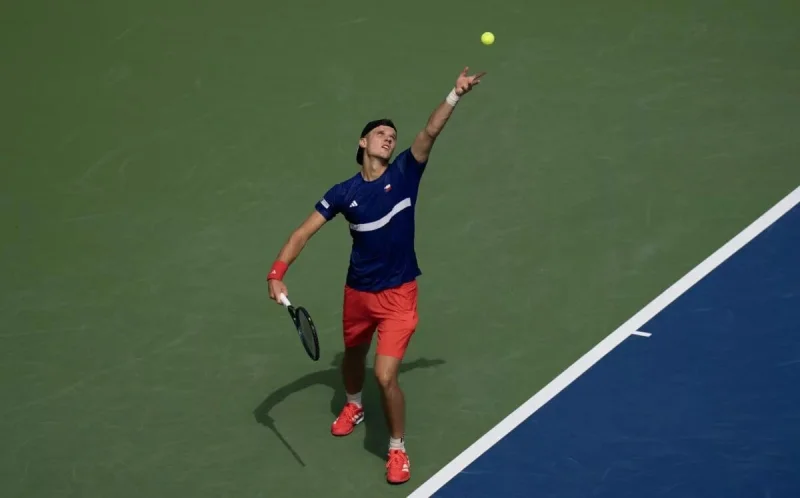
Jakub Mensik will return to action on 15 Jun 2026 with a first-round match against Adrian Mannarino at Queen's, a meeting that brings together two players at very different points in their grass-court development. It will be their first meeting on the ATP Tour, and the winner will leave with the first edge in a rivalry that begins on grass.
The timing gives the matchup real weight. Mensik is back for his second appearance at Queen's Club after a run to the semi-finals at Roland Garros ended with defeat to Alexander Zverev, while Mannarino arrives with the surface know-how of a three-time quarter-finalist at Queen's Club. The Frenchman has already shown he can still handle grass this year, reaching the semi-finals in Den Bosch after beating Gabriel Diallo, Arthur Rinderknech and Zhang Zhizhen before losing to Alex de Minaur.
Mensik, 20, has the better seasonal record at 23-10 and comes in with momentum from Paris, but his numbers on grass show how much he still has to learn on the surface. He has won only six of his 13 career matches on grass, a 6-7 record that leaves little margin for error against a player who knows Queen's Club well. Mensik did beat Cameron Norrie in three sets there in 2025 before losing to Roberto Bautista Agut in three tight sets, so he has already shown he can compete at the venue even if the sample is still small.
Mannarino, by contrast, has the more established Queen's Club record and the more awkward recent history at the event. He lost his last two matches there, falling to Alex de Minaur in 2023 and Grigor Dimitrov in 2024, but a return after a gap since 2024 means he is back on familiar courts rather than starting from scratch. That clash of form and familiarity is what makes the match harder to read than the rankings or records alone suggest. Mensik has the stronger season, Mannarino has the better grass pedigree, and the first test of that balance arrives in the opening round.
What happens next is simple and important: one of them moves on with a 1-0 lead in the head-to-head, and the other leaves Queen's having lost a first meeting that was shaped as much by surface know-how as by current form.
