


Stress along Southern California’s San Andreas and San Jacinto fault systems has reached or even exceeded the highest levels seen in the past 1,000 years, according to new research led by Earth scientists at the University of Hawaiʻi at Mānoa. The study, published in the Journal of Geophysical Research: Solid Earth, puts the region in a critically loaded state after more than 160 years since the last major rupture.
That is why the San Andreas Fault stress level is drawing attention now. The findings do not point to a quake that is about to break loose, but they do show a fault system carrying an unusually heavy load through a long-term seismic cycle that could still produce large earthquakes, including multiple fault events. Liliane Burkhard said the system is highly stressed after more than 160 years since the last major rupture.
The importance of that load is not abstract. A rupture involving both fault systems could be significantly more damaging than a single-fault earthquake because of its size and its proximity to major population centers, including Los Angeles, San Bernardino, Riverside and the Coachella Valley. The study says stress is building across multiple fault segments, which raises the stakes for any event that spreads beyond one break.
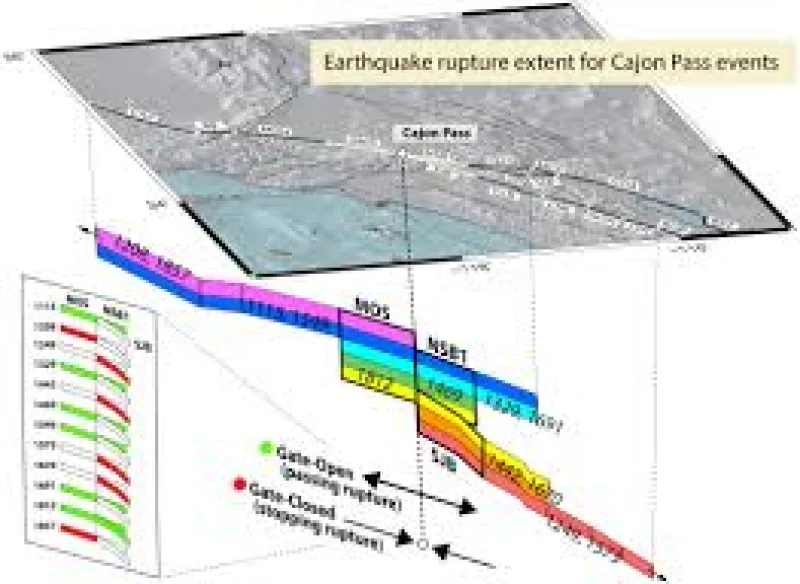
Cajon Pass sits between the San Andreas and San Jacinto fault systems, and the research treats it as a possible earthquake gate. In one direction, it could block ruptures from crossing from one fault to the other; in the other, it could let them link into a single larger event. That possibility matters because the San Andreas Fault is a strike-slip plate boundary where the Pacific Plate and North American Plate slide past each other horizontally, not a continental rift splitting California away from North America.
For now, the key point is the mismatch between stress and timing. The region is more loaded than it has been in a millennium, but the researchers say it is not showing signs of an imminent rupture. Surface rupture is not guaranteed in any earthquake, and most earthquakes do not produce it. What the study sharpens is the question of how much additional strain the system can absorb before one fault, or both together, finally moves.
