


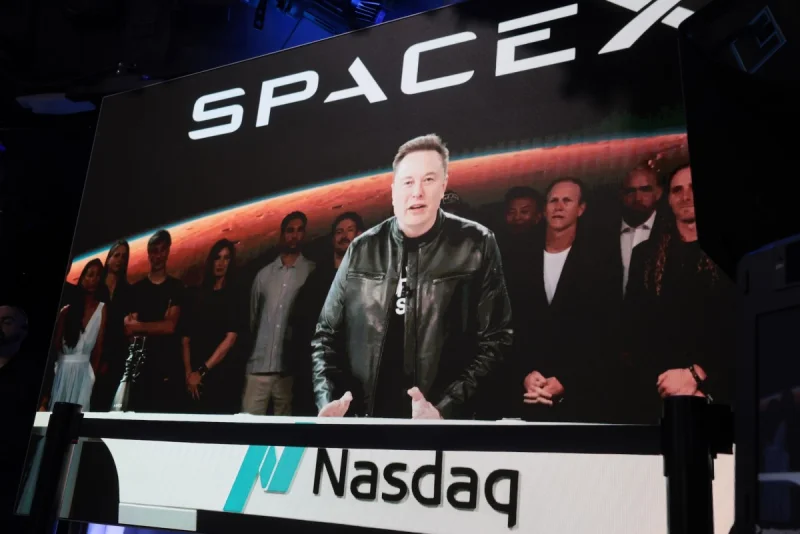
SpaceX ended Friday with a market cap of $2.1 trillion, moving ahead of Tesla’s $1.52 trillion valuation and giving Elon Musk’s rocket company a larger paper value than the carmaker whose stock has long been the better-known market proxy for his empire. The shift matters because it changes the scale of the two companies at the center of Musk speculation, even if nothing on Friday itself pointed to a merger or a deal.
That is why the Tesla stock price is back in the spotlight now: the comparison is no longer theoretical. SpaceX became the sixth most valuable U.S.-listed company behind Nvidia, Apple, Alphabet, Microsoft and Amazon, a ranking that helps explain why investors are parsing every word tied to Musk’s private and public holdings.

Gwynne Shotwell added fuel to that reading on CNBC, where she said a merger “might make Elon’s life a little easier.” It was a light line, but it landed on opening day with enough force to pull fresh attention back to the possibility that SpaceX and Tesla could be linked in some future structure. For readers trying to understand the numbers, the point is simple: SpaceX is now being valued above Tesla, not beside it.
The filing language is where the story gets less tidy. SpaceX’s S-1 said the company may issue a significant amount of equity in connection with future transactions, a phrase that leaves room for dilution if new shares are used as currency. That is not the same as announcing a merger, and it does not confirm that Tesla is the target, but the wording is broad enough that investors can reasonably read it as a signal that future transactions could involve meaningful ownership changes.
That gap between what was said and what was not said is what makes the moment important. On one side is a company now valued at $2.1 trillion. On the other is Tesla at $1.52 trillion, still enormous, but no longer larger in the Musk family of assets. If SpaceX does use equity in a later transaction, the dilution could be significant enough to matter to holders long before any formal deal appears. If it does not, the market will still have learned that the relative weight of Musk’s two marquee companies has shifted in public view. For now, the bigger question is not whether the numbers changed — they already did — but whether the next transaction will turn that valuation gap into something more concrete.
