


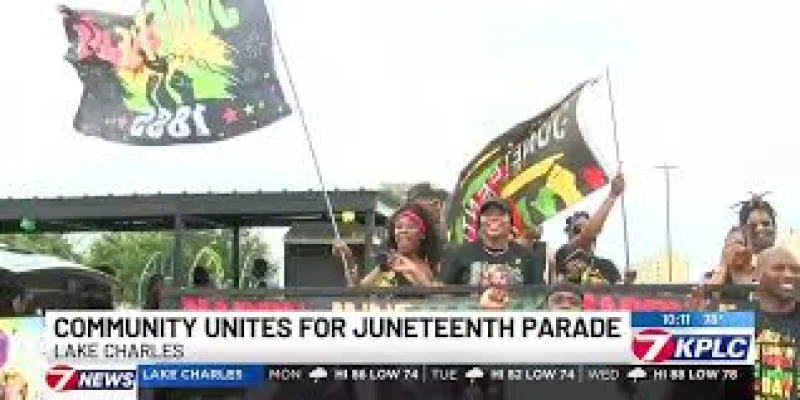
Downtown Lake Charles got its Juneteenth 2026 parade on Sunday, with dozens of floats, cars, motorcycles, church groups and organizations rolling back to the Event Center after cutting through Broad Street, Enterprise Boulevard, Mill Street and Lakeshore Drive.
The scene drew families out for a public celebration tied to freedom, culture and community in Southwest Louisiana, but the day was also about what the march meant to the people riding in it. Harvey Logan was on the Crew Day Logan float with children beside him, and he said he wanted young people to understand where the country started and how far Black Americans have come since then.
Juneteenth marks the effective end of slavery in the United States, and the holiday traces to June 19, 1865, when enslaved people in Texas were informed of their freedom more than two years after the Emancipation Proclamation was signed. That history gave the parade its weight, even as the event itself stayed local and practical: a week-long Juneteenth Festival built around freedom, culture and community, with one Sunday route through town serving as the public centerpiece.
The floats carried portraits and tributes to historic Black figures, turning the route into a moving lesson as much as a celebration. Nathaniel Rapp said it matters for the youth to learn their history because it is not always included in American history, and that understanding the foundation of today has become more important than ever. His point matched the day’s mood: this was not only a parade to watch, but a history lesson children could ride through.
That message sat alongside a more complicated view of the country. Gerry Sly Williams said people talk about the racism in America, but also said people can still come together, arguing that if two children, one Black and one white, were placed in a room in the dark, they would not know the difference. It was the kind of line that gave the parade its edge: hopeful, but not naïve about the country that Juneteenth asks people to remember.
Logan put that same thought in sharper terms when he said 1865 was only the beginning and the fight is not close to over. The parade gave the community a chance to celebrate how far it has come, but the week is not finished, and the bigger question now is how many more of the Juneteenth Festival events will carry that same mix of memory, teaching and public pride.
