


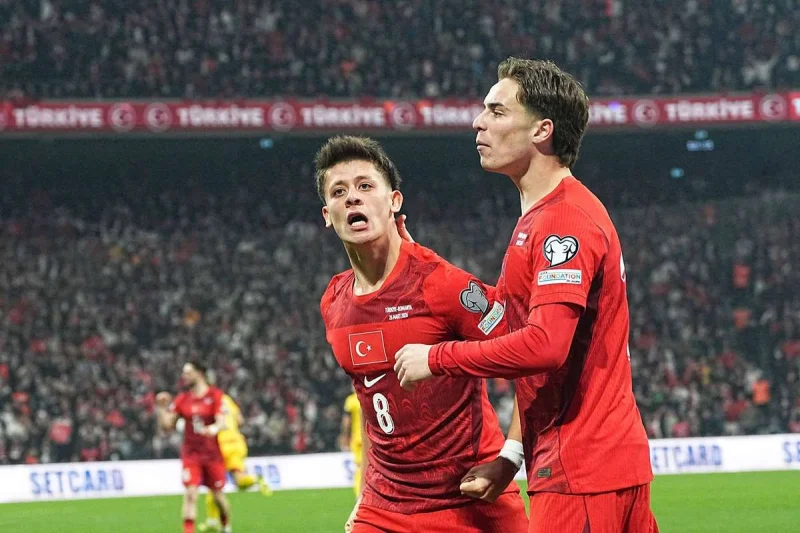
Turkey have arrived at Group D of the World Cup with a squad built for speed, pressure and the ball. Vincenzo Montella has shaped a youthful side around a flexible 4-2-3-1, and the idea is simple enough: use possession to control Paraguay and the United States, then let the talent in front decide the rest.
That is why Arda Guler is at the centre of the discussion now. He recovered from a major injury scare a few weeks ago and is expected to be fit for Turkey’s opening game against Australia, a timely boost for a team that wants its young attackers to carry real weight. Guler, 21, and Kenan Yildiz, also 21, give Turkey pace and invention, while Hakan Calhanoglu remains the elder statesman in midfield and the player most likely to steady the tempo when the match starts to run hot.
Montella has made no secret of what he wants from this team. Turkey are expected to dominate opponents with possession and dictate the pace of games, which suits a group that is strongest in midfield and attack. The balance of the side has been built around that idea during the current World Cup build-up, and the coach’s comments about fitting in with Turkey’s culture underline how fully he has leaned into the project. He has said the culture that raised him and the culture he found in Turkey are strikingly similar, and that he can think, eat and act like a Turk.
The problem is behind them. Turkey’s main concern is defence, where the side is still viewed as unpredictable and short on discipline and organisation. Abdulkerim Bardakci and Merih Demiral are the likely centre-back pairing, but they have never played together at club level, and both have slipped up on occasion. That does not make them unusable. It does mean the margins are thin, especially in a group where the ball will spend enough time in dangerous areas to expose any lapse in timing or shape.
Turkey were last in the World Cup in 2002, when they finished third, and the wait has made this campaign feel loaded with expectation. The camp has been unusually tranquil, with no drama, no major fights and no feuding factions, and the support from media and fans has been stronger than many expected. That calm is useful, but it also leaves the same question hanging over Montella’s side: if the attack gives them a platform, can the defence protect it long enough to carry them through Group D?
Australia comes first, and that match will tell more about Turkey than any broad talk about potential. If Bardakci and Demiral settle quickly and Guler comes through his injury scare without issue, Montella’s youthful squad can make its case immediately. If not, the same unpredictability that has trailed the back line will decide the story before Group D really opens up.
