


The June 2026 new moon arrives at 10:54 p.m. EDT on June 14, and it turns the nights around it into one of the best short windows of the year for skywatching. With moonlight gone, Mercury, Venus and Jupiter stand out more clearly in the western sky after sunset.
That timing matters because people looking for the New Moon June 2026 are really looking for a brief stretch of darker nights. Venus shines a little over three degrees above Jupiter at sunset on June 14, while Mercury sits about 10 degrees lower right of Jupiter. Mercury is only one day from reaching its greatest eastern elongation, which is why it is one of the better evening targets now: when a planet reaches that point, it is pulled farther from the Sun in our sky and stays visible longer after sunset.
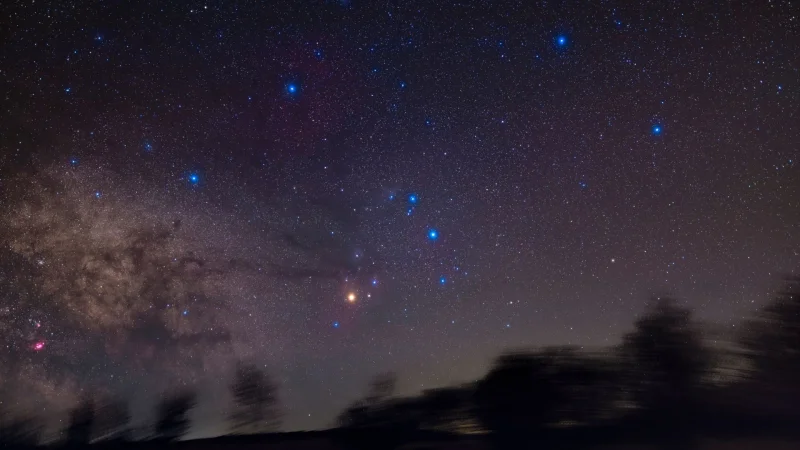
The same evening also offers a wider sweep of late-spring targets. Mars glistens less than 10 degrees above the eastern horizon in the predawn hours, while Saturn shines higher to the east among the stars of Pisces. Neptune sits a little under 10 degrees to the upper right of Saturn, and an 8-inch telescope should show it as a small blue dot from a dark sky location. Farther south, Antares glows between 10 and 20 degrees above the horizon in the southeast after sunset, with the three bright stars Dschubba, Pi Scorpii and Acrab marking the claws of Scorpius and Libra shaped like a kite above them.
The catch is Mercury’s promise is brief. It may be one of the best evening targets of the year, but it still needs a clear western horizon and sets less than two hours after the Sun. That leaves observers little room for error, especially if haze or trees block the skyline. Venus and Jupiter are easier to catch, but Mercury demands speed and a clean view.
After June 14, the waxing crescent returns and starts to wash out the fainter targets again. For skywatchers, the answer is simple: the dark-sky window is real, but it is short, and Mercury is the prize that disappears first.
