


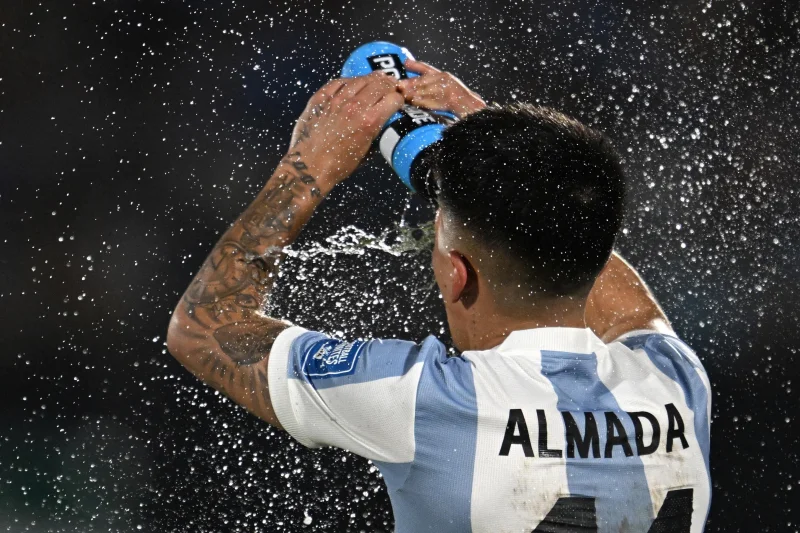
FIFA has mandated three-minute hydration breaks midway through each half of all 104 games at the 2026 World Cup, and broadcasters will be allowed to sell advertising during those stoppages. The rule applies in domed, climate-controlled stadiums as well as outdoor venues when the weather is not hot.
The change matters now because it turns a once-occasional pause into a fixed part of every match. FIFA said the breaks are meant to prioritize player welfare, but the same decision creates new commercial inventory at the biggest tournament in the sport. In March, FIFA said broadcasters could sell ads during the compulsory breaks, and that means the live broadcast will not look the same everywhere. Fox cuts to full-screen commercials during hydration breaks. Telemundo has said it will stay with the pitch, showing team huddles, replays and analysis instead of breaking away.
That split reflects a broader shift in how the tournament will be televised. In Europe, whether viewers see advertising during the breaks depends on the country. Some national broadcasters prohibit those commercials. Others are introducing them for the first time. The rule also standardizes what had previously been left to match-by-match judgment, which makes the 2026 World Cup the first edition to build a commercial break into every half of every game.
The move carries a built-in contradiction. FIFA is selling the breaks as a welfare measure, but it is also handing broadcasters a new slice of airtime. How much money that becomes has not been quantified, and that gap matters because three minutes, repeated twice in 104 games, is a lot of inventory. It is also a change coaches may use in ways FIFA did not advertise, since observers expect the pauses to offer fresh time to talk tactics with players.
The idea did not come out of nowhere. Water breaks were once handled case by case, including during the 2014 World Cup in Brazil. The first unofficial stoppage for water came in a very hot and humid group stage match between the United States and Portugal in Manaus. The first official cooling break followed in a round of 16 match between the Netherlands and Mexico in Fortaleza, where the temperature reached 39°C, or 102°F. Back then, the referee decided when the Wet-Bulb Globe Temperature climbed above 32°C, or 89.6°F. Now the stop is mandatory, not optional, and it will be built into every match regardless of venue or weather.
The 2026 World Cup is also bringing other broadcast changes, including sideline interviews of coaches at halftime throughout the tournament and a halftime show at the final match next month. That final show will feature among others Shakira and Madonna. For viewers following the tournament closely, the bigger question is not whether the breaks exist. It is how much they change the rhythm of the game, the shape of the broadcast and the price of the new ad time that FIFA has created.
