


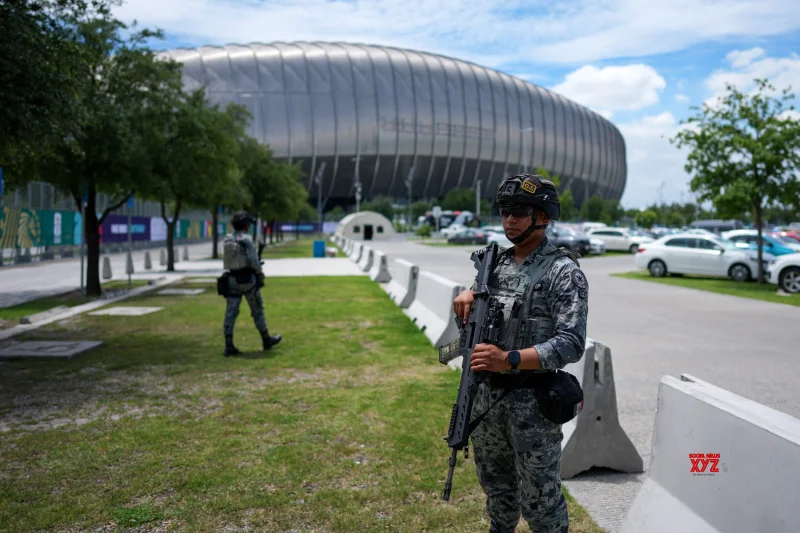
Estadio Monterrey, better known as Estadio BBVA, is set to host four World Cup games this summer, including a round of 32 match. The venue in Monterrey, built in the shadow of Cerro de la Silla, will put one of the city’s most recognizable landmarks back in front of a global audience.
That matters because the mountain is not just scenery. Its peaks can be seen from inside the stadium, and the area has long been wrapped in stories about strange sightings and older legends that still travel alongside the football. Cerro de la Silla rises 1,820 metres above sea level and sits in the Sierra Madre Oriental, giving the stadium a backdrop that is as fixed as the tournament schedule now is.
The venue’s four matches are spread across the tournament in a way that keeps Monterrey in the picture well beyond the opening weeks. One of them is a round of 32 tie, which means the stadium will remain part of the competition after the group stage is over. For local fans, that turns a familiar building into a stage for one of the World Cup’s most watched knockout rounds.
That same hillside has been feeding local folklore for generations. Some say the name Cerro de la Silla came from Alberto del Canto, who saw a saddle-like shape in the mountain’s U shape in the 16th century. Others call it the Giant of Monterrey, the Silent Guardian and the Crown of the City. There are stories of a fallen giant frozen in time, and of a birdman living in its caves. The legends are part of why the stadium feels tied to the mountain, not just placed beside it.
The strangest account in that landscape comes from January 2004, when Leonardo Samaniego Gallegos said he was making nighttime rounds on the outskirts of Monterrey and saw a mysterious figure near where the stadium now stands, just below Cerro de la Silla. He said the creature had eyes that were completely black, flew toward him, hit his windshield and ended up on his car bonnet. He lost consciousness until his commander arrived and found he had fainted, and TV reports from the time showed him being attended to by paramedics.
Samaniego Gallegos later said he spent two days in hospital while doctors carried out tests on him. He also said four men in suits took away the police uniform he was wearing that night. Jaime Maussan later invited him onto his TV show, and the Nuevo Leon OVNI Club carried out its own investigations in the area and interviewed him in 2006. People who follow OVNI stories treat the account as proof of an encounter with something else; others note that Maussan has had various UFO claims debunked, which leaves the 2004 incident hanging between belief and doubt.
What matters now is not whether the mountain legend is true. It is that Estadio Monterrey is about to be seen by a wider audience than ever, and the setting will be part of the picture every time the cameras turn to the stands. The football is what brings the crowd, but the mountain behind it is what gives the place its memory.
