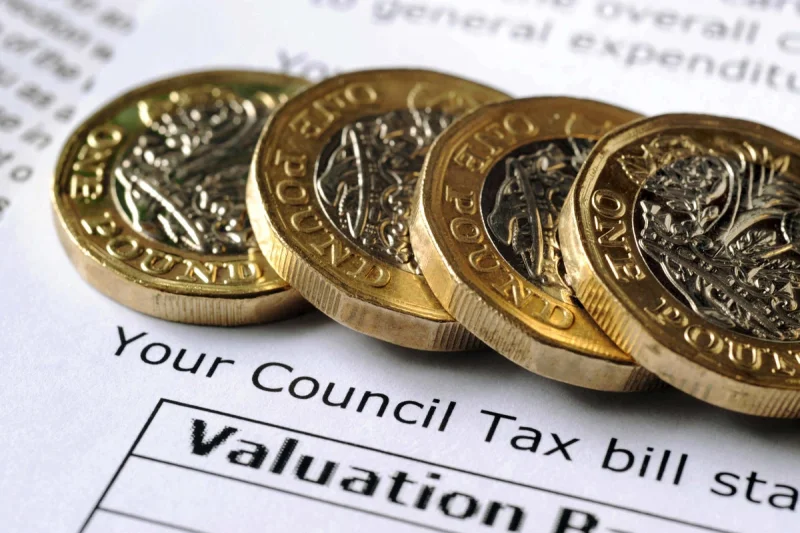
At least 1.5 million people were taken to court over unpaid council tax debt last year, new research suggests, a scale that points to a vast and worsening burden on households across Britain.
The figure emerged at the GMB annual congress in Blackpool on Tuesday, where Rachel Harrison said councils were being pushed into court action simply to keep themselves afloat. The union said freedom of information replies from 200 local authorities showed 1.4 million people were summoned to court in the financial year 2024/25, a total it believes is too low because some councils did not respond. Even on the figures already returned, the caseload is large enough to show that council tax enforcement is not a marginal problem but a routine feature of how many local authorities collect money.
Harrison said the council tax system is “completely broken” and argued that the banding system is badly out of date. She said cash-strapped councils are being forced to pursue one-and-a-half million people through the courts “just to make ends meet,” adding that austerity has left deep scars on public services that will last for a generation or more. Her case is that the pressure does not stop with the bill: low funding also feeds through to pay for the workers people rely on to look after loved ones, take rubbish away and keep towns and cities running.
The missing piece is how much higher the total could be. The GMB did not name which local authorities failed to reply, and that means the 1.4 million figure is only a floor, not a ceiling. But the broader point is already clear: when the known returns from 200 councils still show 1.4 million court summonses in one financial year, the system is relying on mass legal action to cover ordinary funding gaps. Harrison said the answer is more guaranteed central government funding, progress on council tax reform so the richest pay their share, and changes to business rates so authorities get more to regenerate high streets.
That leaves the central question unresolved in practical terms, not rhetorical ones: whether reform will arrive before another year of court claims pushes the total even higher. For now, the figures show a local finance system leaning on enforcement at a scale that is hard to defend and harder to ignore.