


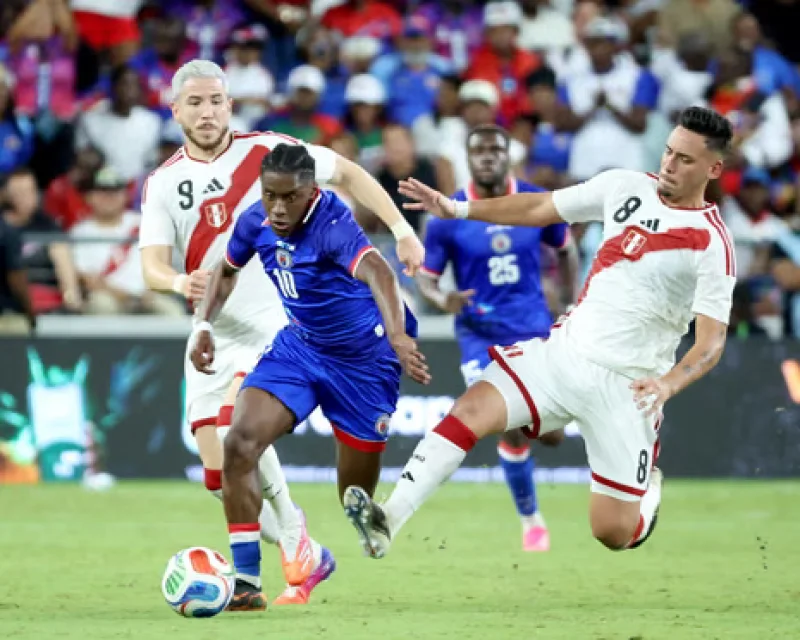
Haiti are back at football’s biggest stage. The country has reached the 2026 World Cup for the first time since 1974, ending a 52-year absence after a qualification campaign built entirely away from home.
The return matters now because Haiti begin that comeback at 2am on Sunday against Scotland at Boston Stadium, with a squad that looks as global as the route that took it there. Only 10 of the 26 players were born in Haiti, and the team’s cast includes Jean-Ricner Bellegarde, who was born and raised in France before switching his allegiance.
Bellegarde said Haiti is always in his blood. He had won caps for France’s youth national teams, but the call from Duckens Nazon helped change the decision. Nazon, Haiti’s record goalscorer, told him it was time and that Haiti needed him. Bellegarde said: “So when Duckens Nazon called me and said it was time, that Haiti needed me, that this was our moment, things shifted for me.”
The makeup of the side explains why this qualification has resonated far beyond a single match. Tamy Michel represents players including Ricardo Adé, Bellegarde, Wilson Isidor and Nazon, and he said the family have been stewards of Haitian football since 1974. He pointed to a long habit of being doubted and dismissed, saying people usually decide Haiti are not ready, do not expect them to make it, and judge them by statistics and rankings rather than by the game itself. His point was simple: football is played on the field, and it is 11 against 11.
That argument sits alongside a harder one. Haiti are being introduced as a national side, but their squad is drawn from far and wide, with many players based outside the country and most of the 26-man group born elsewhere. The blend is not a contradiction so much as a description of modern Haitian football, where identity, opportunity and survival have all been pushed into the same shirt.
The return also lands against a background that has rarely made football easy to separate from life. Haiti’s story has unfolded amid political turmoil, gang violence, natural disasters and humanitarian crises, and the team’s road to the World Cup finals has added another layer to that history. Solange Michel led Baltimore SC for 18 years and was jailed in the 1990s amid turmoil in Haitian politics, a reminder that the sport’s family has lived through the country’s wider upheaval as well.
For now, though, the only number that matters is the one on the fixture list. Haiti are in the World Cup again, and the first test of whether this improbable qualification can turn into something more comes on Sunday morning against Scotland at Boston Stadium.
