


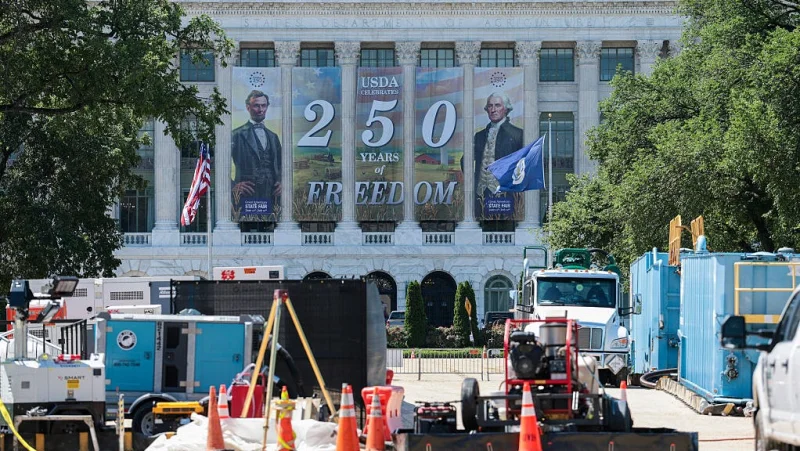
Massachusetts is among the states that have opted not to take part in the Great American State Fair, adding to the uncertainty around an event that is supposed to open June 25 on the National Mall. With the 16-day fair only days away, the roster of states and territories still looks unsettled.
That matters because Freedom 250 has promoted the fair as a centerpiece of the nation's 250th anniversary, built around pavilion displays from all 50 states and six territories. The group had said each would design an interactive space highlighting its own character and contributions, a promise that now looks harder to fulfill as states continue to step back.
Several states have said they will not directly participate, and the list now stretches beyond Massachusetts. Oregon and Washington have declined invitations, while Illinois, Maine and Oregon will not be sending a delegation, according to separate reports. Maryland, Pennsylvania and Washington remain uncommitted, leaving organizers without a full lineup for the National Mall showcase that was meant to project national breadth.
North Carolina's Michele Walker said her state is not attending because of the expenditures required to participate. Connecticut's Cathryn Vaulman put the same point more bluntly, saying the decision came down to resources and that the federal government has asked states to foot the bill, including staffing a multiweek exhibition. Oregon's Luke Harkin said cost was part of the problem and that the event has become, in his view, a more partisan affair than was originally presented.
That political strain has deepened since Trump announced on June 24 that the concerts tied to the fair would be replaced with a rally headlined by himself, with Lee Greenwood and Christopher Macchio also set to perform. The concert lineup had already started to unravel as musicians backed out, citing the event's perceived political affiliation, which only sharpened the concern among states trying to decide whether to commit time and money.
Freedom 250 has insisted the fair is a nonpartisan effort and points to its work with red, blue and purple states. Even so, the central promise of a 50-state, six-territory exhibition is now under pressure, and the most important unresolved question is no longer whether the fair will open, but how much of the country it will actually be able to show when it does.
