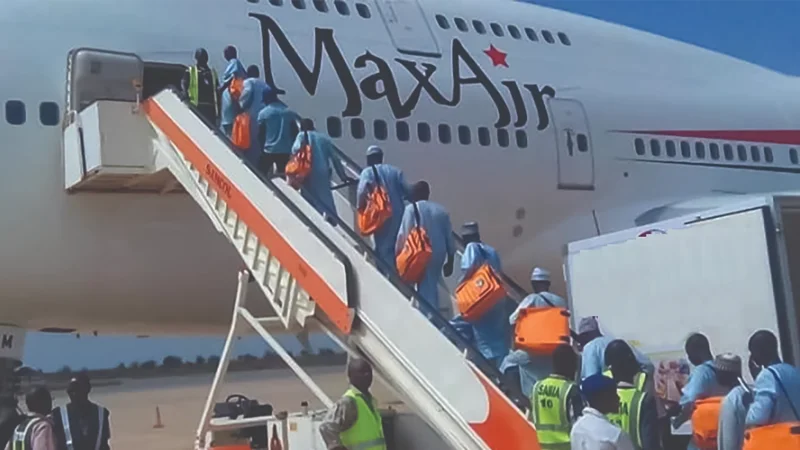
The Aviation Ground Handlers Association of Nigeria suspended services to Max Air yesterday, and the move effectively grounded the airline’s domestic operations nationwide over debt. The association said it had reached the point where it could no longer keep absorbing the cost of the carrier’s unpaid bills.
Olaniyi Adigun said Max Air refused to sit down with the handling companies to reconcile and settle what it owes, even as other debtor-airlines were still in talks. “We took decisive action on Max Air today because the airline refused to negotiate with us,” he said, adding that the association could no longer sustain the financial burden created by the carrier’s prolonged non-payment for services rendered.
The grounding matters now because it is the first major enforcement action AGHAN has taken against a defaulting airline, and it lands after months of rising friction between ground handling firms and carriers over unpaid service charges. Investigations by the correspondent put Max Air’s exposure to Skyway Aviation Handling Company Plc and Nigerian Aviation Handling Company Plc at about N1 billion, a bill large enough to explain why the dispute has moved from warnings to sanctions.
Adigun said several other airlines that owe the two major ground handling companies are already reconciling their accounts, with some nearing Memoranda of Understanding on repayment. He warned that the latest step should be read as a signal to the industry that ground handlers can no longer keep providing services without payment.
There is, however, one clear exception. AGHAN said the suspension would not affect Max Air’s ongoing hajj operations because the handling charges for the pilgrimage flights are paid directly by the National Hajj Commission of Nigeria. That leaves the airline’s domestic network shut while its seasonal religious flights continue, a split that shows the association is pressing hardest where the debt sits.
AGHAN had earlier issued several deadlines warning that unpaid obligations could trigger withdrawal of services. It had planned to start enforcement on May 1, 2026, but suspended that move on Workers’ Day in the name of industrial harmony before issuing a fresh three-day ultimatum to the affected airlines. Max Air’s next move is now the key unknown: whether it comes back to the table quickly enough to win back its domestic flights.