


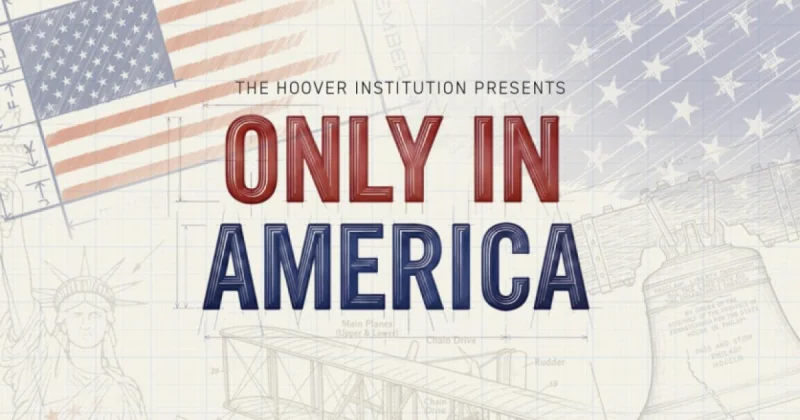
The Hoover Institution opened its new Only in America interview series on June 10 with an episode built around Jensen Huang, and the first conversation set the tone quickly. Condoleezza Rice sat down with the NVIDIA chief executive at the company’s Santa Clara campus and used his life story to frame the series’ central idea: that American institutions, culture and freedoms can turn talent into something much larger.
The debut matters because Huang is not just another guest in a launch episode. He is one of the country’s most visible technology leaders, and the series is designed to use conversations with Hoover fellows and American business leaders, scientists and artists to examine how innovation and entrepreneurship take root. Rice called his experience an embodiment of the American dream, and Huang answered in the same register, saying, “I am the embodiment of the American dream... I'm the first-generation immigrant with parents that gave up everything to be here with no way to fall back.”

That line explains why the series is arriving now. Hoover is using a high-profile founder to make a larger argument about America’s one-hundred-year history of institutions that protect economic freedom and reward risk, while Huang’s own path points to something more personal: a family that arrived from Taiwan with little room for failure. The pairing gives the launch both a patriotic pitch and a lived example, which is part of what makes it easy to watch past the first few minutes.
Rice underscored that point by saying that sometimes the clearest way to think about what it means to be American is through one person’s experience, and that Huang’s story is one of those. He said NVIDIA’s success was made possible by the ethos and institutions that foster and sustain economic freedom in the United States. That is also where the series’ claim becomes more complicated. The story celebrates America as uniquely enabling innovation, but it also lands through immigration, sacrifice and a start that depended on parents who, in Huang’s words, had “no way to fall back.”
Hoover, based at Stanford University and in Washington, has signaled that Only in America will continue as an in-depth look at the people and ideas shaping American enterprise. The first episode does not spell out the full guest list or the next set of lessons, but it makes the series’ method clear: use prominent voices to test a familiar national promise against real lives. If the rest of the run follows that model, the question is not whether America can produce success stories. It is which ones are vivid enough to reveal how the system actually works.
