


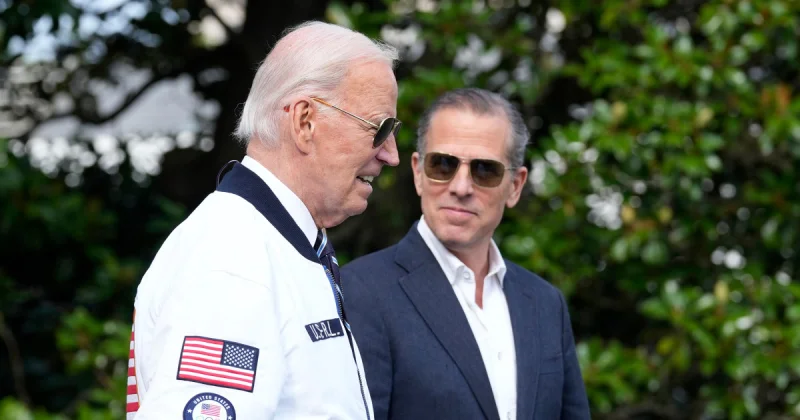
Hunter Biden said Friday that his father’s decision to pardon him in December 2024 put family ahead of political damage, a choice he said came after Donald Trump won a second term and the White House changed around him.
Speaking on California Gov. Gavin Newsom’s podcast, Hunter Biden said Joe Biden “chose me over his legacy,” arguing that the pardon was not only personal but a break with the image his father had built as a rule-bound president. He said the move tarnished Joe Biden’s reputation as commander in chief, even as it ended the federal tax and gun cases that had shadowed him for months.
The pardon was full and unconditional and came shortly before Hunter Biden was due to be sentenced in the two federal cases. He had been convicted by a federal jury in Delaware on gun charges and later pleaded guilty to three felony and six misdemeanor tax charges, leaving him exposed to prison time before his father stepped in.
Hunter Biden said Joe Biden had been “absolutely 100% genuine” when he repeatedly promised not to interfere in the cases, but changed course after Trump’s victory made the future look hostile. He said Trump had expressed a desire to make Matt Gaetz his attorney general and that he would have been under the supervision of the Bureau of Federal Prisons under the new administration, a prospect he compared to “having a gun to my family’s head for the next four years at least.”
That explanation tracks the strongest reason the pardon now matters: it was not issued in a vacuum, but after a prosecution that began during the first Trump administration and continued through Joe Biden’s presidency. Merrick Garland kept the U.S. attorney in place after becoming attorney general, and a plea deal that might have resolved both cases earlier fell apart, leaving the president with a decision he had long said he would not make.
Joe Biden later said when he signed the pardon that “raw politics” had “infected” the cases and “led to a miscarriage of justice.” Jill Biden backed the decision, saying on NBC’s “TODAY” that “of course” she supported it and that the process “was not fair to Hunter,” while also saying, “Joe wasn’t thinking about himself. He said all along that he was not going to pardon Hunter, but then the administration changed.” The pardon ended the federal cases, but Hunter Biden’s explanation leaves one question hanging over it: whether the president changed his mind only because the legal risk changed, or because the political cost of doing nothing had become greater still.
