


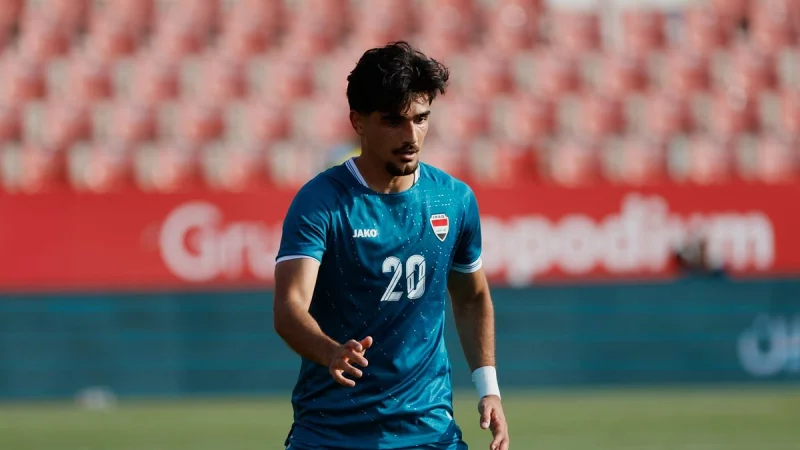
Iraq’s 26-man roster for the 2026 World Cup includes four Christians, a share that gives a tiny minority an outsized place on the team. Marsen Banni said the squad fills him with hope, pride and excitement, and that it sends a powerful message that Iraqi Christians remain an integral part of Iraq.
The timing matters because national squads are now being assembled for the tournament in the United States, Canada and Mexico, and Iraq’s list is already drawing attention for what it says about the country’s football identity. The four Christian players are Aimar Sher, Rebin Sulaka, Kevin Yakob and Frans Putros. Together, they make up 15% of the roster even though Christians account for less than 1% of Iraq’s population.
Each player’s path to the team also tells a different story. Sher was born in Iraq and moved to Sweden when he was four. Sulaka was born in Ankawa, the heavily Christian suburb of Erbil in Iraqi Kurdistan, before moving to Sweden when he was 10. Yakob was born in Sweden and started out with Assyriska BK in Gothenburg. Putros was born in Denmark to Iraqi Christian immigrant parents.
One name that was floated elsewhere for Iraq’s Christian representation does not belong in that category. Marko Farji is a Muslim Kurd, not a Christian, a distinction that matters in a roster conversation where identity has become part of the story. Iraq also did not call up Peter Gwargis, who had played in Australia and was a prominent figure in several qualification games under Graham Arnold, adding another layer of selection debate around the squad.
Iraq’s Christian presence on the World Cup stage is unusual, but it is not without precedent in the region. Jordan has two Christians in its squad, Ihsan Haddad and Odeh Al-Fakhouri, while Egypt has gone 23 years without a Christian player on its national team and Iran’s current squad has none. Iraqi football also carries a deeper historical thread: Ammo Baba scored the country’s first goal in 1957, later managed the national team, and now has a new 31,000-seat stadium named after him under construction in Baghdad.
There is still one unresolved question around Iraq’s World Cup build-up. Two members of the team, a player and the team photographer, were held and questioned at Chicago airport for several hours before being released, but it is not clear whether that incident affected any player’s availability or preparation. For now, the roster stands as a rare snapshot of Iraqi football, and of a Christian community that has found an outsized place on one of the sport’s biggest stages.
