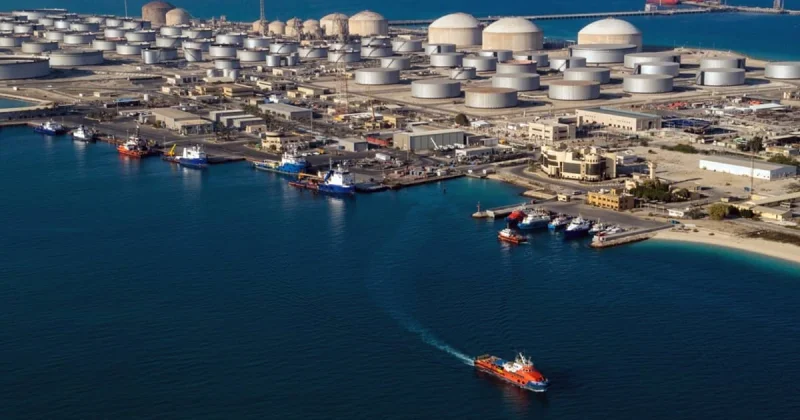
China’s top energy regulator and an Aramco executive met in Beijing on a day when the global oil market was already under strain. NEA deputy administrator Song Hongkun met with Aramco downstream president Mohammed Y Al Qahtani to discuss global energy security and bilateral oil and gas cooperation.
The timing gave the meeting added weight. It came after the US-Israeli war on Iran began in late February and disrupted global oil and gas supply, with the Strait of Hormuz remaining effectively closed. In that setting, Beijing, the world’s largest oil importer, was again looking at how to keep supplies moving without leaning too heavily on any one source.
Song said he hoped Chinese and Saudi companies would strengthen communication, deepen cooperation and prudently address risks. That message fits the way China has managed its energy lifeline for years: Saudi Arabia is one of its biggest oil suppliers, but Beijing still keeps its imports diverse, a hedge that matters when a single route or producer becomes unstable.
The talk in Beijing also underscored a broader reality for both sides. Saudi producers want stable access to the Chinese market, and China wants security without overexposure. The meeting put those interests in the same room, but no agreement or concrete next step was announced, leaving the discussion as a signal of alignment rather than a deal with immediate consequences.