


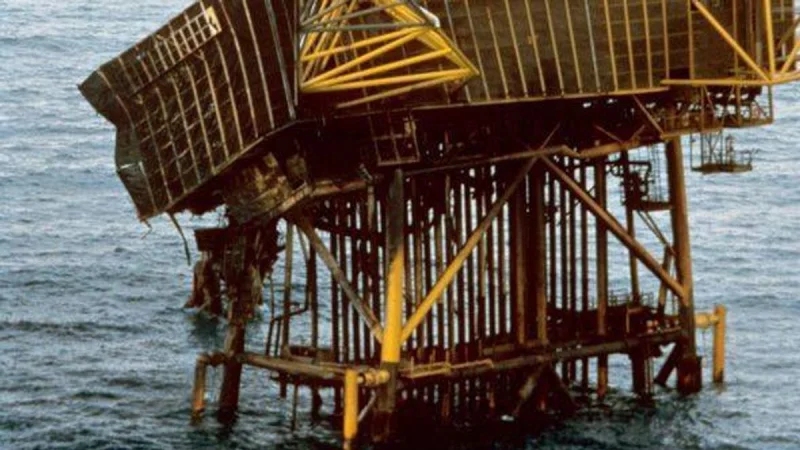
On July 6, 1988, Piper Alpha turned from the world's most productive offshore platform into the site of the deadliest rig disaster in history. Escaping gas condensate ignited jet fires on the North Sea platform, and within a little more than an hour the weakened structure was sliding into the sea.
The scale of the loss still gives the date its weight. Sixty-one people got out alive, but 81 workers inside the four-story accommodation module were killed as the collapse dragged them into the ocean, and the fires and explosions ultimately claimed 167 lives. For years, Piper Alpha had been the single largest oil producer in the world, pumping 15.1 million gallons a day and supplying about 10 percent of the U.K.'s oil and gas production, so its destruction shook the offshore industry far beyond the North Sea.
Piper Alpha itself had begun production in December 1976 after the Piper oilfield was discovered in 1972 roughly halfway between Aberdeen and Bergen. By 1978 it had been retrofitted to produce natural gas as well as oil, and three days before the disaster the platform was already in the middle of a major overhaul involving six separate projects. The rig had four modules, including the gas compression module where trouble started brewing on the night of June 6.
The immediate cause was brutally specific. Pump A had a pressure safety valve removed and replaced with a blind flange that was not leak tested, but the evening crew did not know the valve was missing. When pump B shut off at 9:45 p.m. because of a mechanical problem, workers restarted pump A and gas condensate began escaping through the temporary flange. The resulting explosion set off a chain of subsequent blasts that rocked the platform, and by morning three-quarters of the structure above the water line had tumbled into the sea. It took weeks to douse the fire.
What happened next was an inquiry that fixed the blame in public record but left one crucial question hanging. Within a week, the Secretary of State for Energy appointed Lord Cullen to lead an investigation, and its findings were published in November 1990. They said the deaths were caused by a missing pressure valve tied to a work permit mix-up, the same flaw now echoed whenever North Sea oil safety is debated, including in current calls for tighter regulation such as those surrounding the UK North Sea Oil Ban set for law as Labour pushes energy independence. What the findings did not explain was how that permit failure was allowed to happen, or who should have stopped it before the first spark.
That unanswered gap is what still shadows Piper Alpha. The fire began as a mechanical failure, but the disaster was made by a system that let a missing valve pass through a complicated permit process unseen by the crew that needed to know.
