


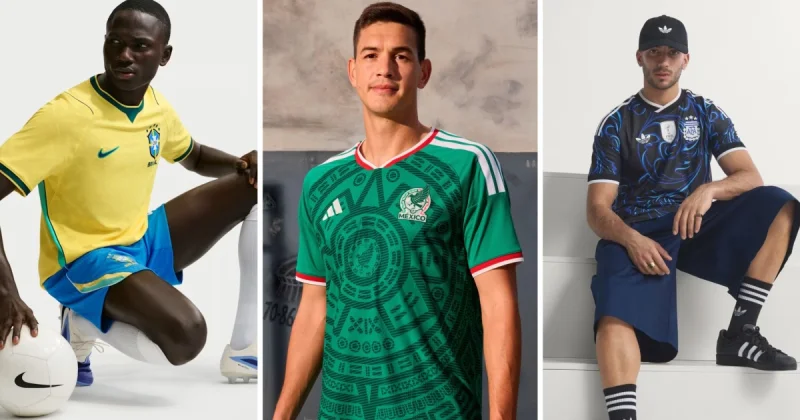
Fans heading toward the 2026 FIFA World Cup are already choosing retro shirts over the newest official releases, and sportswear brands are bracing for a merchandise race that could look very different from past tournaments. Vintage and second-hand jerseys are no longer a niche buy for collectors; they are becoming a mainstream choice for supporters who want something that feels older, rarer and more connected to the game’s past.
That shift matters now because the tournament is imminent, and the kit market is moving before the first whistle is even blown. Search data on resale platforms shows shirts worn by the United States, Mexico, Germany and Nigeria in the 1990s among the most sought-after items, a sign that the classic look has become a live business rather than a sentimental side market. For fans looking for a Mexico soccer jersey, the pull is not just the national team badge but the way older designs carry memory, identity and fashion appeal at once.
Jon Copestake, EY Global Consumer Senior Analyst, said the market is moving in a 30-year fashion cycle, with the 1990s especially popular for retro jerseys. He said current kits are increasingly built around that nostalgia, while others, including Mexico’s, draw on national heritage in a way that makes them feel more than just sportswear. The effect is visible in the broader market too, where online platforms such as eBay, Depop and Vinted have made rare shirts easier to find and helped push shirt collecting from a specialist hobby into a global business.
Brands are responding by blending football and streetwear more aggressively. Corteiz has launched its Rules The World Cup Tour collection, a six-week run of soccer-inspired jerseys and tracksuits representing 11 nations, including England, France, Ghana, Mexico and the U.S. Fanatics also opened a pop-up England store on Carnaby Street in London on 21 May, another sign that the shirt is now being sold as both matchwear and fashion item. Copestake said the central piece is increasingly the jersey itself, with more apparel for women and more collaborations with social media influencers and musicians helping bring newer generations into the market.
The friction for manufacturers is plain: many supporters arriving at matches in Los Angeles, New York, Dallas and Miami may not wear the latest tournament shirt at all. They may turn up in 1994-era U.S. tops or older Mexico, Germany or Nigeria kits instead, which could soften demand for new 2026 World Cup releases even as resale and vintage sales climb. How much that changes the bottom line for major sportswear companies will not be clear until the tournament crowd actually shows up dressed for a different decade.
