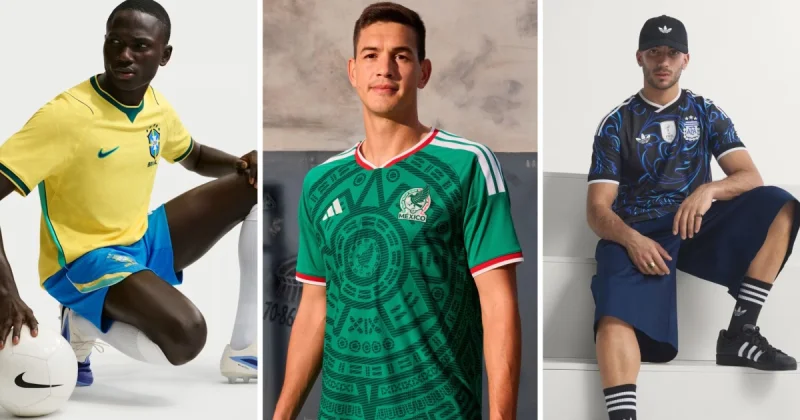
Retro soccer shirts are muscling into the 2026 FIFA World Cup merchandise race, and they may end up on more shoulders than the new national team kits that sportswear giants are preparing to sell. Demand for vintage and second-hand jerseys has exploded ahead of a tournament that is supposed to be one of the most lucrative shopping moments in soccer history.
That shift matters now because the World Cup is close enough for fans to start choosing what they will wear, and many of them are already choosing older shirts over the latest releases. Vintage jerseys from the 1980s, 1990s and early 2000s are fetching premium prices on resale platforms, with shirts linked to Argentina’s 1986 triumph, Brazil’s 1998 campaign, England’s Italia '90 run and France’s 1998 victory among the most sought-after.
Jon Copestake said the market is moving in a 30-year fashion cycle, with the 1990s especially strong because the look is feeding off nostalgia. He said current kits are echoing that mood, and noted that other designs, including Mexico’s, are also drawing on national heritage. In that sense, the Mexico World Cup Jersey is no longer competing only with rival teams’ shirts; it is competing with memory.
The resale market has become much easier to access. Classic Football Shirts now ships worldwide and has worked directly with clubs, brands and players, while eBay, Depop and Vinted have put rare shirts within reach of far more buyers. Fans heading to matches in Los Angeles, New York, Dallas and Miami are likely to wear vintage jerseys from the 1994 tournament in the U.S., turning the stands into a moving archive of old designs rather than a showroom for the newest ones.
That is the friction for brands preparing fresh releases. The clean commercial logic of a World Cup launch assumes supporters will buy the official shirt for 2026, but the broader market is showing that many will happily spend the same money, or more, on a faded original with history attached. Even streetwear labels are leaning into the same pull: Corteiz launched its Rules The World Cup Tour collection with soccer-inspired jerseys and tracksuits representing 11 nations, including England, France, Ghana, Mexico and the U.S., as part of a six-week, 11-city global tour, while Fanatics opened a pop-up England store on Carnaby Street in London on 21 May.
What happens next is less about whether retro shirts are fashionable — they already are — and more about how much of the 2026 World Cup merchandise boom gets diverted away from the new kits. If the stands fill with 1990s originals and early 2000s collector pieces, the official shirt may still sell, but it will no longer own the tournament’s visual identity.