


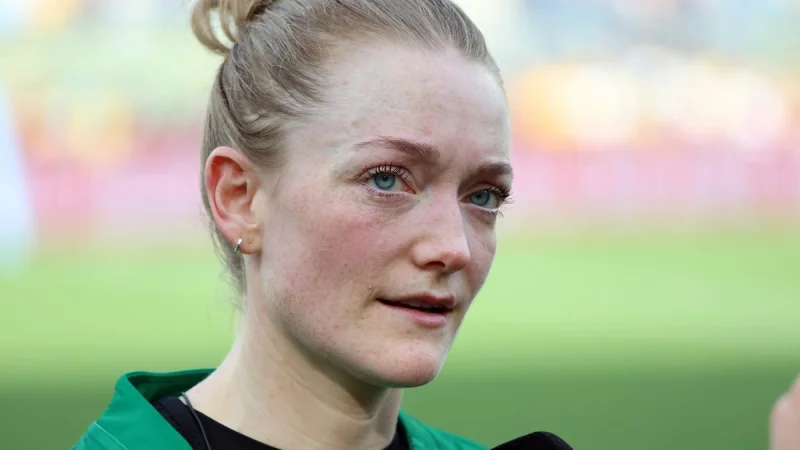
Hollie Davidson is facing sharp criticism after last weekend's ill-tempered URC semi-final between Leinster and Stormers, a match that ended with complaints over her handling of the contest and renewed debate about where she stands for bigger appointments.
The response gathered force on Thursday, when pundits revisited a game that had already turned ugly on the field and in the tunnel at half-time. South African fans and commentators were unhappy with the officiating, and the discussion quickly moved beyond one or two decisions to whether Davidson had let the game drift into a pattern of confrontation.
Owen Doyle said Davidson should have shown a straight red card to Ruan Ackermann for what he described as a violent clearout on Leinster hooker Rónan Kelleher. He also said she needed to stamp out the backchat she was taking from players throughout the match. Tappe Henning has already made clear that referees are no longer expected to tolerate that kind of constant questioning.
The criticism sharpened because Davidson only complained at about the hour mark that her decisions were being repeatedly challenged. By then, Caelan Doris and Ruhan Nel were said to have been incessantly in her ear, a dynamic that fed the sense that control of the match had slipped long before the final whistle. Doyle said she should have applied the zero-tolerance approach from the start, adding that it was unsettling and that, while the World Cup remained in her sights, she was not yet on the plane.
Nick Mallett added another flashpoint from the same game, saying a lineout incident at 13-11 should have brought a penalty to the Stormers. He pointed to a moment where the visitors were interfered with in the 22 and said it should definitely have been picked up. Those complaints only deepened the sense that the semi-final was not simply hard fought, but poorly managed in a contest already marked by the half-time tunnel tussle between players.
The scrutiny lands at a sensitive moment for Davidson because elite referees are being judged as much on game control as on accuracy, and this was a high-profile knockout match watched for signs of who might get the biggest fixtures next. The question now is not whether the performance drew criticism; it clearly did. It is whether that criticism will cost Davidson a place in the URC final and slow her progress toward the World Cup.
That debate sits alongside another officiating story that surfaced in April, when the Fijian Rugby Union and Mick Byrne agreed to part ways. Fiji chair John Sunday reportedly said Byrne's health had been a factor, but Byrne said he had been cleared and had no ongoing health issues that would stop him doing the job. His departure had already drawn attention because of his record, including Fiji's first win over Wales in Cardiff, and his insistence now is blunt: “I just want to clear the air on my situation, I didn’t resign, and I do not have any ongoing health issues.”
For Davidson, the issue is immediate and unresolved. The criticism has been aired publicly, the refereeing standards around backchat have been tightened, and the next appointment will say far more than any defence can.
