
Russell T Davies has defended the brutal ending of Tip Toe after the five-part drama’s final episode showed the events leading up to Leo being hanged from a lamppost outside his house. The series, starring Alan Cumming and David Morrissey, was already laying out that fate from episode one, but the finale pushed the story straight into the violence.
That is why viewers are searching for Tip Toe now: all five episodes are available on Channel 4’s streaming service, while episodes four and five were due on Channel 4 on Monday and Tuesday night. Major spoilers have followed the release, but the ending is the part Davies wanted people to sit with, not just the shock of it.
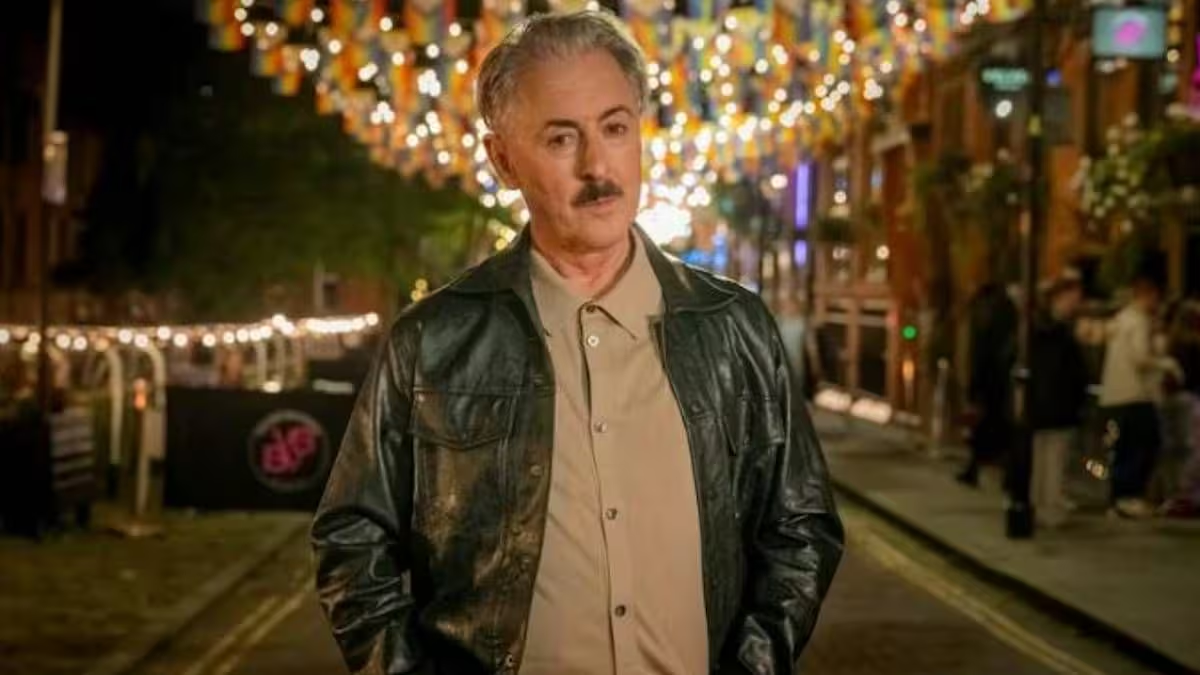
The drama centres on two neighbours whose feud grows into something all-consuming, and Davies has been clear that he does not see it as a cautionary tale about some distant future. He described it as a reflection of the modern world as he sees it, saying the story should feel close because the violence and hate it draws on already feel close. David Morrissey put it more bluntly: “You only need to look at the news now to know that we’re not talking about some vague future events, it’s right here, right now.”
What makes the ending harder to shake is the form Davies chose for Leo’s death. He said that if the character had been beaten or stabbed, the image would already feel familiar from recent headlines, but “the fact that there’s a formality to the death” makes it unusual. He compared it to Mussolini hanging from a lamppost, calling it something that has happened within living memory, or within the lifetimes of parents. That is the friction at the heart of Tip Toe: it is rooted in the present, yet its final image reaches back into history.
Cumming said he and Morrissey knew as soon as they read the script that the shoot would be difficult, and both actors checked in on each other as filming went on. Cumming said the work was exhausting, but the cast and crew held together, and his dog Lala was with him too, even turning up as an extra in the scene where Leo goes into Clive’s house for the last time. The question left behind is not whether Davies intended the ending to shock. It is whether he has made a drama so close to current hate that the final image feels less like fiction than a warning already arriving.