


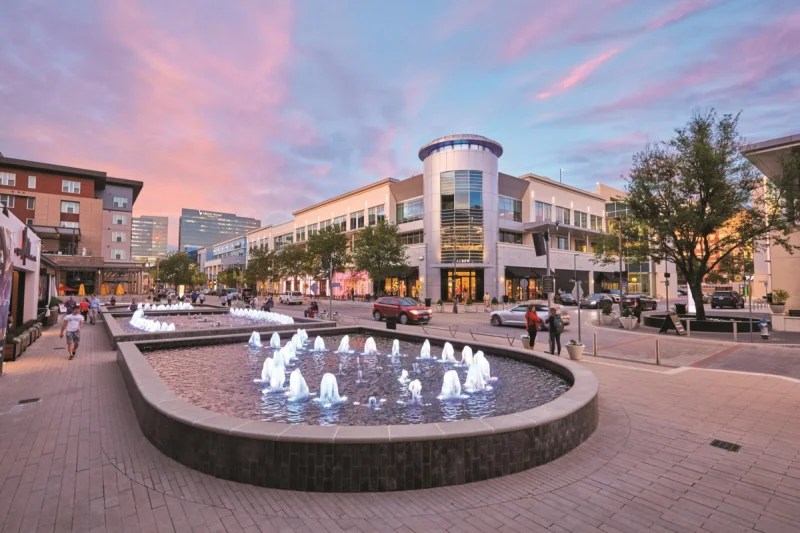
Collin County’s leaders are trying to answer a question that grows sharper with every new neighborhood, corporate campus, road and park: how do you keep a place recognizable while it changes so fast? That debate is now part of Collin County Celebrates, a countywide initiative from the Collin County Business Alliance marking its 15th anniversary alongside the nation’s 250th.
For Florence Shapiro, the answer starts with showing up. Shapiro began public service in 1979 after years of volunteer work with the Plano Service League, went on to serve as mayor of Plano and then spent 20 years in the Texas Senate. She described elected office as problem-solving work, the kind where people bring their concerns and expect help finding a path through them. That idea matters in a county where local officials decide day-to-day questions about school funding, public safety, zoning and parks.
Shapiro’s name carries particular weight in Plano and across the county because her public life was shaped not just by politics, but by crisis. After the 1993 murder of 11-year-old Ashley Estelle in Plano, she formed a task force focused on changing sex offender laws in Texas. She said the goal was to make sure it never happened again and to change the laws dramatically so others would not be preyed upon. That kind of local memory is part of what community leaders say they want to preserve as the county expands.
But the challenge is not only growth. It is participation. Election results from 2021, 2023 and 2025 show voter turnout in Collin County municipal elections running at roughly 10% to 14%, a level that leaves a small slice of residents deciding issues that shape daily life. In a county adding new developments and corporate campuses as well as parks, roads and neighborhoods, that gap matters because it means the people most affected by local decisions are often not the ones casting ballots.
That is why the business alliance has also launched Collin County Votes, a non-partisan civic-engagement effort designed to educate residents, simplify the voting process and remind them that building a community’s soul begins at the ballot box. Shawn Jackson, the executive director of Kaleidoscope Park in Frisco, called the park one of the most impactful projects he has seen come to life and said it shows what can happen when philanthropy, public-private partnership, civic leadership and art come together. In a county trying to grow without losing itself, that is the model leaders are holding up.
The unresolved question is whether that civic message can reach beyond the already engaged. Collin County is still one of the fastest-growing areas in Texas, and the people making decisions about what comes next are asking residents to treat local elections as part of the county’s identity, not an afterthought. If turnout stays at the bottom of the scale, the county’s future will keep being shaped by a narrow group. If more residents show up, the story of growth could start looking more like a shared decision than a one-way change.
